One More Gadget, Less Power: The Hidden Cost of Bolt-On Boost Controllers on Your WRX

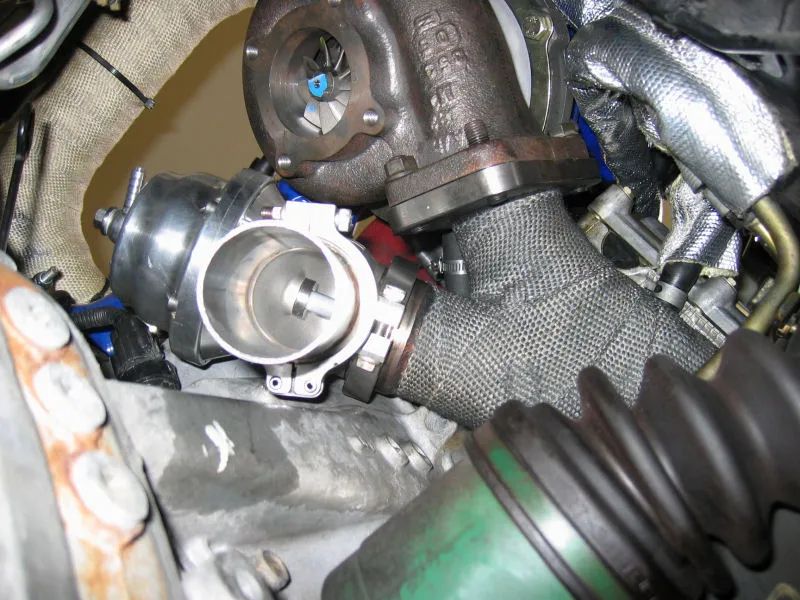
Photo: Pioneer UAV, Inc, CC0, via Wikimedia Commons
There's a certain kind of upgrade that feels like a no-brainer. You've done your research, watched the YouTube videos, read the forum threads, and landed on a boost controller. It's not a full turbo swap. It's not a built motor. It's just a little device that lets you push more air through the system — what could go wrong?
As it turns out, quite a bit. And the frustrating part is that nothing breaks. The car still runs. You might even see a spike on your boost gauge that makes you feel like something good happened. But pull it onto a dyno and the numbers don't lie. In a lot of cases, adding a boost controller to a stock or lightly modified WRX with an unmodified ECU doesn't just fail to add power — it actively takes some away.
Let's talk about why.
Your ECU Already Has a Boost Strategy — And It's Protective by Design
The FA20 and FA24 engines in modern WRX platforms don't just tolerate boost. They actively manage it through a tightly integrated loop involving the ECU, the turbo's wastegate solenoid, knock sensors, and fuel trims. Subaru's engineers spent years calibrating that relationship for reliability and emissions compliance under real-world American driving conditions — everything from Phoenix summers to Minnesota winters.
When you introduce an aftermarket boost controller into that loop, you're not just adding a new variable. You're interrupting an existing conversation. The ECU expects to send a signal to the wastegate solenoid and get a predictable response. When a manual or electronic boost controller starts intercepting or overriding those duty cycle signals, the ECU can interpret the resulting pressure readings as erratic or unexpected behavior.
What happens next depends on the car. On a stock-tuned WRX, the ECU will often pull timing — sometimes aggressively — because its knock and load tables weren't built to handle the pressure curve your controller is producing. You're making more boost, but the engine is protecting itself by pulling back ignition advance. The result? Flat or negative power gains at the wheel.
What the Dyno Actually Shows
This isn't theoretical. Shops that regularly tune WRXs have pulled cars onto the dyno before and after a manual boost controller install on an otherwise stock setup, and the results are consistently humbling.
A common scenario: a 2022 WRX with zero other mods, stock air intake, stock exhaust, stock ECU tune. Before the boost controller, it puts down numbers consistent with Subaru's factory spec — roughly 220-225 whp depending on conditions. After a manual boost controller is plumbed in and cranked up to hold 18-19 psi versus the stock 14-15 psi range, peak numbers often drop into the 210-215 whp range. You're spinning the turbo harder and making less power at the wheels.
The reason shows up in the datalogs. Timing is getting pulled in the 4,000-6,000 RPM range — exactly where you want the engine to be making peak torque. The ECU sees boost that doesn't match its expected duty cycle response, flags it as a potential knock condition, and retards timing as a safety measure. It's doing its job. Your boost controller is also doing its job. They just happen to be working against each other.
Electronic Controllers Aren't Automatically Better
Some enthusiasts figure that a manual boost controller is too crude and upgrade to an electronic boost controller (EBC) — something like a Turbosmart eBoost or a Blitz unit. These are genuinely sophisticated pieces of hardware, and in the right application, they work well. But on a stock-ECU WRX, the core problem remains.
An EBC can hold boost more precisely and respond to different RPM points, but it's still operating outside the ECU's closed-loop boost management system. In some configurations, it can actually create more conflict because it's fighting the wastegate solenoid duty cycle more aggressively than a manual setup. You end up with boost spikes, inconsistent spool, and an ECU that's constantly chasing a target it can't hit.
The solenoid itself is another underappreciated piece of the puzzle. Subaru's factory boost solenoid is tuned to work within a specific duty cycle range. Some aftermarket solenoid upgrades — designed to flow more and respond faster — can actually confuse ECU feedback loops on cars that haven't been retuned to account for the new hardware. More capability doesn't mean more compatibility.
The Fix Isn't What You Want to Hear
Here's the part nobody puts in the product listing: a boost controller on a stock-tuned WRX is, at best, a sideways move. To get real gains from increased boost pressure, you need a tune that's built around that pressure. The ECU needs to know what boost level to expect, how to adjust fuel delivery to match it, and where to hold timing to take advantage of the extra air charge.
That means if you want to run elevated boost, the correct sequence is: boost controller (or upgraded wastegate actuator) plus a proper ECU tune — whether that's an Accessport with an appropriate map or a full custom tune on a Cobb, EcuTek, or similar platform. Skipping the tune and going straight to the hardware is where the power losses live.
The good news is that when the whole system is calibrated together, the gains are real and consistent. Shops running custom tunes alongside proper boost management on a bolt-on FA20 or FA24 with supporting mods regularly see 260-280 whp without touching the internals. That's meaningful. But it requires treating the engine as a system, not a collection of independent parts.
Stop Treating Your WRX Like a Buffet
The temptation to add one more thing is real — especially when you're already deep in the mod game. Boost controller here, upgraded solenoid there, maybe a fuel pressure regulator while you're at it. Each piece sounds reasonable in isolation. But modern WRX ECUs are built around tight integration, and every auxiliary device you add is another potential point of conflict.
Before you buy the next gadget, ask a simple question: does my current tune account for this? If the answer is no, you're probably not adding power. You might be subtracting it.
The WRX is one of the most tuner-friendly platforms on the market, and that's genuinely one of its best qualities. But that friendliness comes with a responsibility to understand how the pieces fit together. Do it right, and the dyno sheet rewards you. Do it in the wrong order, and you'll be scratching your head wondering why your "upgrade" made the car feel worse.
Spoiler: it's not the car. It's the sequence.