Your WRX Got Tuned and Now It Feels Slower — Here's What's Actually Going On
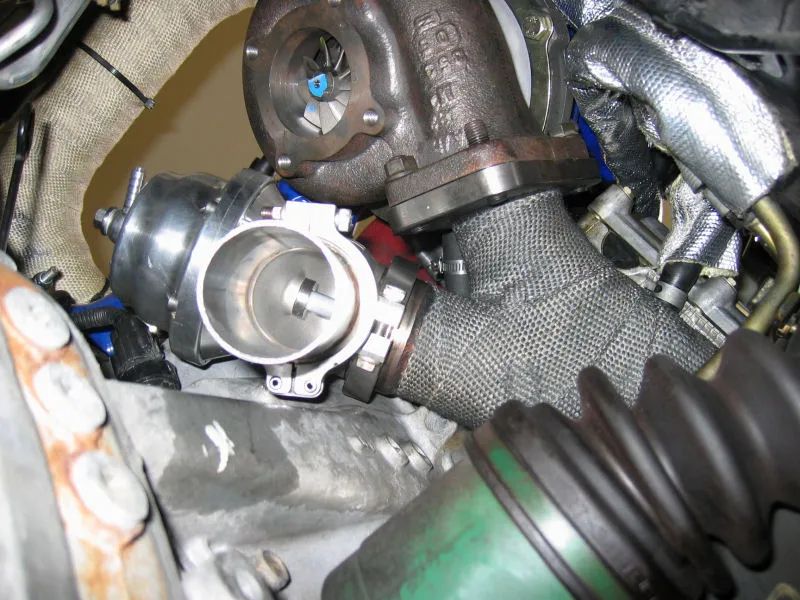
Photo: Freonr2, Public domain, via Wikimedia Commons
You saved up, found a reputable tuner, strapped your WRX to the dyno, and walked away with a sheet showing more peak horsepower than stock. So why does it feel like you're driving through wet concrete every time you pull out of a stoplight? You're not crazy. This is one of the most common complaints in the WRX community, and it's also one of the most misunderstood.
Let's break down what's really happening — because the answer almost never has anything to do with your boost controller.
The Spool Problem Nobody Wants to Talk About
Here's the thing about turbo lag: it's not a flaw, it's physics. The turbocharger on your WRX needs exhaust energy to spin up, and until that turbine gets moving, you're not making boost. That gap between throttle input and actual power delivery is spool time, and it exists on every turbocharged car on the planet.
Where tuning enters the picture is in how the ECU manages fueling and ignition timing during that spool window. Stock Subaru maps are conservative by design — they're written to keep warranty claims low and to work across a wide range of altitudes, fuel qualities, and driving conditions from Vermont winters to Arizona summers. When a tuner rewrites those maps, they're optimizing for a narrower, more specific operating range.
The problem? Some tunes — especially remote tunes built around generic base maps — prioritize peak numbers over real-world drivability. They're chasing dyno figures, not street feel. The result is a car that looks great on paper and feels sluggish in traffic.
Why Your Brain Is Also Part of the Equation
Driver expectation is a legitimate variable here, and it deserves more credit than it gets. Before your tune, your WRX had a familiar power delivery curve. You knew exactly when it was going to pull, how hard, and for how long. Your foot had muscle memory built around that behavior.
After a tune — even a well-executed one — that delivery curve changes. The power might come on later in the RPM range, or it might hit harder in a narrower band. If you're still driving the car the same way you did before, you're probably not in the right RPM range to actually feel the improvement. You're essentially using a new recipe with old cooking habits.
This is especially common with stage 2 tunes that include an upgraded downpipe. The reduced back pressure can actually delay spool slightly at lower RPMs before making significantly more power higher up. It's a real trade-off, and if your tuner didn't explain that to you, that's on them.
The Boost Controller Myth
Every time this topic comes up in a forum thread or Discord server, someone inevitably says: "Just get a boost controller and crank it up." And every time, that advice misses the point entirely.
A boost controller — whether it's a manual ball-and-spring type or an electronic unit — adjusts your wastegate duty cycle to allow higher peak boost levels. What it does not do is fix spool characteristics, rewrite fueling maps, or address ignition timing. Slapping a boost controller on a car that already has a mediocre tune doesn't solve the underlying problem. In a lot of cases, it makes things worse.
Running elevated boost on a map that wasn't written to handle it is how you end up with knock events, cracked pistons, and a very expensive lesson. The boost controller isn't the villain here — misusing it is.
What a Good Tune Actually Looks Like in Practice
The tuners who are genuinely solving this problem aren't just chasing peak numbers. They're spending time on the low and mid-range torque curve, dialing in throttle response mapping, and making sure the transition from vacuum to boost feels natural and linear.
Shops doing this right — whether it's a local Cobb Pro Tuner doing in-person dyno pulls or a well-regarded remote tune from someone like Vishnu/Shiv Motorsports or EcuTek-based tuners — will ask you how you actually drive the car. Do you daily it through city traffic? Do you autocross on weekends? Are you mostly doing highway pulls? That information shapes where the tune gets prioritized.
If your tuner never asked those questions, that's a flag.
Another thing to look for: good tuners will walk you through what changed and why. They'll explain if spool characteristics shifted and what you should expect differently behind the wheel. Transparency isn't just good customer service — it's a sign they actually understand what they built.
Map Selection Matters More Than Most People Realize
If you're running a Cobb Accessport on an off-the-shelf map, the map selection itself could be your culprit. OTS maps are built around a middle-of-the-road baseline — they're designed to be safe across a range of hardware configurations. If your setup is even slightly different from what the map was designed for (different intake, different exhaust, different TGVD delete status), you're running a map that doesn't perfectly match your car.
This is why the community pushes so hard for custom tunes. An OTS map might be a fine starting point, but it's rarely the final answer for a car that's been modified beyond the basics.
So What Do You Actually Do?
If your WRX feels slower after a tune, start by ruling out the simple stuff. Check for boost leaks — they're more common post-tune than people expect, especially if any intake components were touched. Make sure your intercooler connections are solid. Pull the Accessport logs if you have them and look for knock activity or fuel trims that are running rich or lean at part throttle.
If everything checks out mechanically, go back to your tuner with specific feedback. "It feels sluggish below 3,500 RPM" is actionable. "It feels slow" is not. Good tuners want that information — it helps them refine the work.
And if your tuner isn't responsive or dismisses your concerns? Find a new one. The WRX community in the US is big enough that there's no reason to stay loyal to someone who isn't doing right by your car.
The Bottom Line
A tune that makes your WRX feel worse isn't a tune — it's a problem waiting to become a bigger problem. The culprit is almost always one of three things: spool characteristics that shifted with your new hardware, a map that wasn't dialed in for how you actually drive, or driver expectations that didn't adjust to a new power curve.
Boost controllers won't fix any of that. What will fix it is honest communication with a tuner who knows what they're doing, and a willingness to understand that peak dyno numbers and real-world feel are two very different things. Your WRX deserves both.