Going Naturally Aspirated on Your FA20: Is the No-Boost Build Actually Worth It?
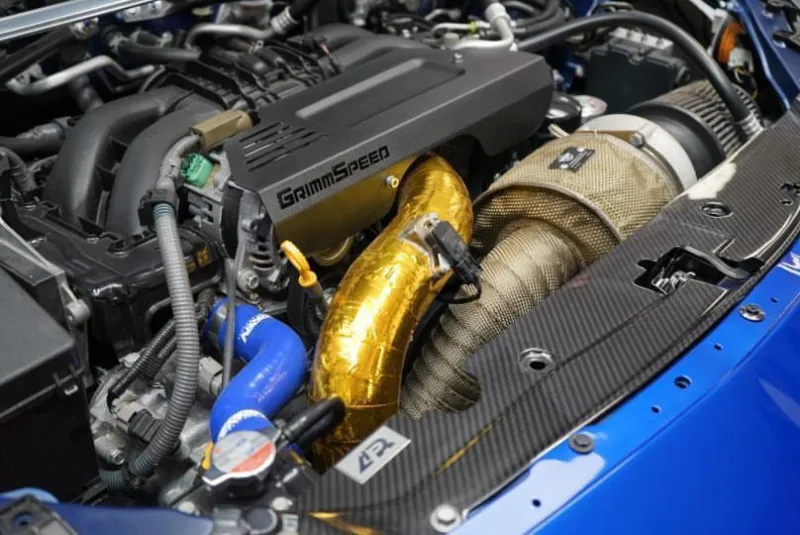
Photo: Subaru WRX FA20 engine bay performance build, via i.redd.it
Let's be honest — the phrase "naturally aspirated WRX" sounds like heresy to most of us. The whole identity of this car is built around that turbo spool, that surge of boost, that kick in the chest when the power band hits. But there's a quieter conversation happening in the WRX community, one that doesn't get a lot of airtime on the big forums. A handful of dedicated builders are taking the FA20 — the 2.0-liter boxer that powered the 2015–2021 WRX — and tuning it for NA performance. No turbo, no intercooler, no boost controller. Just displacement, airflow, and mechanical grip.
Is it practical? Debatable. Is it interesting? Absolutely.
Why Would Anyone Do This?
Before you close the tab, hear us out. The case for an NA FA20 build isn't really about raw numbers. You're not going to out-horsepower a Stage 2 turbocharged WRX. That's not the point. The appeal here is about throttle response, mechanical feel, and a different kind of driving engagement.
Turbo lag — even on a well-tuned setup — creates a slight disconnect between your right foot and what the engine actually does. An NA motor eliminates that entirely. What you get is linear, immediate power delivery that feels more like a sports car than a rally machine. For autocross competitors, track day regulars, or anyone who spends more time in tight, technical situations than open-road pulls, that responsiveness has real value.
There's also the reliability argument. A properly built NA motor running on a conservative tune doesn't have the heat cycles, boost pressure, or fueling demands of a forced-induction setup. Long-term durability can be genuinely excellent if the build is done right.
The Bolt-On Foundation
Any serious FA20 NA build starts with the basics, and there's more room here than most people expect. The factory intake and exhaust are notably restrictive when you're trying to maximize airflow without boost helping things along.
Cold Air Intake: A quality CAI — brands like Cobb, Perrin, or AEM — opens up the intake tract and gives the FA20 room to breathe. On an NA setup, you'll feel this more than on a boosted car because you're not masking the restriction with turbo pressure. Gains are modest (5–10 whp in most dyno pulls), but the throttle feel improvement is real.
Exhaust System: This is where NA builds get interesting. Running a full catback and a high-flow cat — or going cat-delete for track-only builds — allows the FA20 to exhale properly. The boxer's exhaust note opens up nicely, and you can pick up another 8–12 whp depending on headers. Unequal-length headers are stock on the FA20, which gives it that signature burble, but equal-length headers smooth out the powerband and can add measurable gains at higher RPM.
Throttle Body Spacer: Cheap and often overlooked, a throttle body spacer increases plenum volume slightly, improving low-end torque response. It's a $60–$100 modification that punches above its price on an NA build.
Where the Real Gains Come From
Bolt-ons will get you to roughly 190–200 whp on an FA20 in NA trim, depending on your baseline and the quality of your parts. To go further, you need to get into the internals.
Camshaft Upgrades: Aftermarket cams — options from Kelford and Web Cams are popular in the Subaru community — change the lift and duration profile to favor higher RPM power. This is where NA builds start to feel genuinely different. You'll trade some low-end grunt for a motor that pulls hard and revs freely to redline. Pair this with a retune and you're looking at meaningful gains in the 210–225 whp range.
Porting and Polishing: A good machine shop can port the FA20's heads to improve airflow velocity. This is labor-intensive and not cheap — budget $800–$1,500 for quality head work — but on an NA motor it's one of the highest-impact modifications you can make.
Compression Ratio: The stock FA20 runs around 10.6:1 compression. Swapping to high-compression pistons (think 11.5:1 or higher) extracts more energy from each combustion cycle. This requires premium fuel and a careful tune, but it's a cornerstone of any serious NA build.
Real Build Examples and Dyno Numbers
One build that's been making the rounds in the community belongs to a builder out of Colorado who daily-drove his 2017 WRX for three years before going full NA. His setup includes:
- Full catback with equal-length headers
- Kelford stage 2 cams
- Ported and polished heads
- 11.2:1 compression pistons
- Cobb Accessport tune (NA-specific map)
His last dyno session put him at 218 whp and 179 lb-ft of torque — numbers that won't embarrass anyone at a track day, and delivered with zero lag. He's been running the car for 18 months post-build with no issues.
Another build out of the Pacific Northwest went a different direction, keeping the internals mostly stock but focusing heavily on airflow and tune. Result: 197 whp, but an extremely linear powerband that the owner describes as feeling "like a completely different car."
The Tuning Piece Is Non-Negotiable
You cannot do a serious NA FA20 build without a proper tune. The factory ECU map is built around a turbocharged engine, and even bolt-on modifications will leave power on the table without recalibration. The Cobb Accessport is the most accessible option for most owners, and Cobb's NA-specific off-the-shelf maps are a solid starting point. For anything involving cam swaps or internal work, you'll want time on a Mustang or Dynapack dyno with a tuner who has specific FA20 experience.
Expect to spend $300–$600 for a professional tune, and don't skip it.
Is This Path Right for You?
An NA FA20 build isn't for everyone. If you want maximum horsepower for the dollar, a turbo upgrade is still the more efficient route. But if you're chasing a specific driving character — immediate throttle response, high-revving engagement, and a motor you can trust for the long haul — the NA path has genuine merit.
The WRX community is at its best when people push the car in unexpected directions. Whether you're all-in on 400whp turbo builds or curious about what the FA20 can do without forced induction, there's room for both conversations here at WRX21. This just happens to be the one fewer people are having — and that makes it worth exploring.