Snow Tires Showdown: Do You Really Need to Drop $1,200 on Winter Rubber for Your WRX?
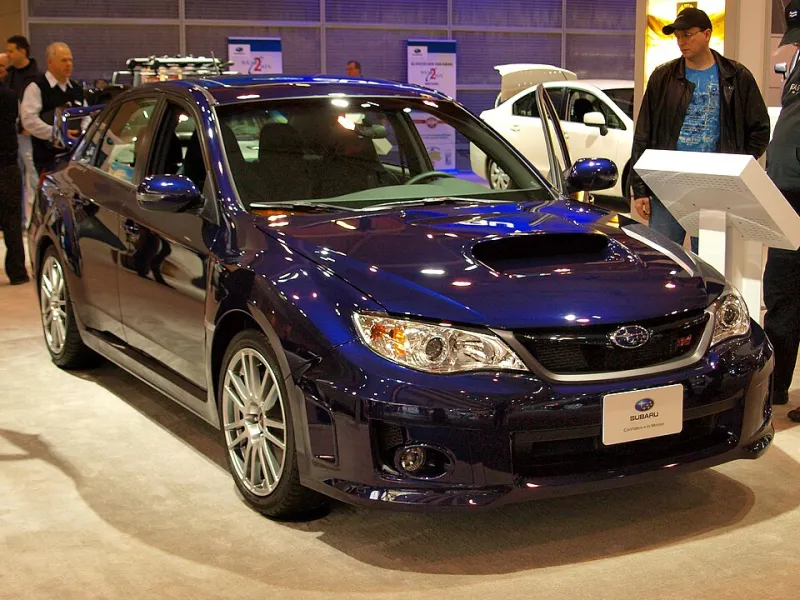
Photo: Michael Gil from Toronto, ON, Canada, CC BY 2.0, via Wikimedia Commons
Every fall, the same question pops up in WRX Facebook groups, subreddits, and Discord servers across the country: Do I really need premium winter tires, or will a budget set get the job done? It's a fair question. A full set of mounted and balanced winter tires on a dedicated steel wheel package can run anywhere from $600 to well over $1,400 depending on the brand. That's real money, especially when your WRX's AWD system already inspires a lot of confidence in slippery conditions.
We decided to stop speculating and start testing. Over the course of a northern winter — think sloppy Ohio highway slush, icy Michigan side streets, and a couple of proper snowstorms — we ran two Gen 4 WRXs (2015–2021) and one VA-generation car alongside a 2022 Gen 5 through a structured comparison between budget-tier and premium winter rubber. Here's what we found.
The Tire Lineup
For the budget side of the test, we ran the Firestone Winterforce 2 and the General Altimax Arctic 12, both in 225/45R17 fitment on steel wheels. Street price for a set of four mounted and balanced: roughly $580–$640 depending on your local shop.
On the premium end, we tested the Michelin X-Ice Snow and the Bridgestone Blizzak WS90 — two tires that consistently top independent winter tire rankings in the US. Mounted and balanced on the same steel wheel setup: $1,050–$1,280 for a set of four.
All testing was done with tires at the same pressure (32 psi cold), on cars with comparable mileage and similar factory suspension setups. No performance mods that would skew the handling results.
Straight-Line Snow and Slush: Closer Than You'd Think
Here's the part that surprised us most. In basic forward-traction situations — merging onto a snowy highway, pulling out of an unplowed parking lot, climbing a gradual incline — the budget tires performed respectably. The Firestone Winterforce 2 in particular felt confident and predictable in packed snow. The WRX's symmetrical AWD system does a lot of heavy lifting here, distributing torque to where it's needed and masking some of the difference between tire tiers.
The gap started to show in deeper, unpacked snow. The Blizzak WS90's siping pattern — those tiny cuts in the tread blocks that act like thousands of mini-edges — grabbed more aggressively and maintained forward momentum where the budget tires began to struggle. In a simulated "stuck in a parking lot" scenario, the premium tires required noticeably less wheel spin to get moving.
Advantage: Premium, but the gap is smaller than the price difference suggests in straight-line conditions.
Braking on Ice: This Is Where It Gets Real
If there's one area where premium winter tires justify their price tag, it's ice braking. We ran repeated 30-mph-to-stop tests on a cleared section of iced-over road (private property, obviously — don't try this on a public road), measuring stopping distance with a GPS-based app.
The results were stark. On glare ice:
- Michelin X-Ice Snow: Average stopping distance — 52 feet
- Bridgestone Blizzak WS90: Average stopping distance — 55 feet
- General Altimax Arctic 12: Average stopping distance — 68 feet
- Firestone Winterforce 2: Average stopping distance — 74 feet
That's not a small difference. On ice, 20 extra feet of stopping distance is the gap between a clean stop and a fender bender. The compound chemistry in premium winter tires — specifically the silica-enriched rubber that stays pliable at lower temperatures — creates genuine, measurable grip advantages on hard ice that budget tires simply can't match.
Advantage: Premium, and it's not particularly close.
Wet Road Handling: The Overlooked Winter Condition
Most tire comparisons focus on snow and ice, but if you live in the Mid-Atlantic, the Southeast, or the Pacific Northwest, a lot of your "winter driving" is actually wet pavement in cold temperatures. We ran handling evaluations on wet roads in the 35–45°F range — the kind of conditions where an all-season tire starts to get nervous but isn't quite cold enough to matter much.
Both tire tiers handled wet roads capably. The WRX's chassis balance is excellent in these conditions regardless of rubber, and we didn't find meaningful differences in cornering confidence or straight-line wet braking between the budget and premium options. The Michelin had a slight edge in wet cornering feel — more feedback through the steering — but the gap was subtle.
Advantage: Slight premium edge, but budget tires are genuinely competitive here.
Gen 4 vs. Gen 5: Does the Newer Car Change the Equation?
The 2022+ Gen 5 WRX runs a slightly wider factory tire footprint and has updated AWD tuning compared to the VA generation. We expected the newer car to be more forgiving of tire quality differences, but the results were largely consistent across both generations. The ice braking gap between budget and premium tires showed up similarly on both cars. The Gen 5's steering felt more communicative overall, which actually made the difference in tire feedback more noticeable — you could feel the premium tire's edge through the wheel.
So What Should You Actually Buy?
Here's our honest take, broken down by how you use your car:
Go premium if: You drive in areas with significant ice exposure (the upper Midwest, New England, mountain regions), you have a longer commute, or you're relying on your WRX as your only vehicle through winter. The Blizzak WS90 is our top pick for most owners — it's widely available, competitively priced within the premium category, and has a long track record in the Subaru community.
Budget tires are fine if: You're in a region where snow is the primary concern and ice is rare, you have a short commute, or you're working with a tight budget and need something better than all-seasons. The General Altimax Arctic 12 is the strongest budget performer we tested and represents solid value.
Don't skip the dedicated wheel package. Whether you go budget or premium on tires, running them on a dedicated set of steel wheels is the move. Swapping twice a year is faster, easier on your summer rims, and usually saves money on mounting fees over time.
The Bottom Line
The WRX's AWD system is genuinely impressive in winter, but it only controls how power gets to the ground. It can't change how well your tires stop, turn, or grip on ice. Premium winter tires earn their price difference where it counts most — and on a car you're trusting to handle real winter conditions, that's worth thinking seriously about.
That said, a budget winter tire is still a massive upgrade over all-seasons, and if premium pricing isn't in the cards this year, don't let perfect be the enemy of good. Get dedicated winter rubber, swap in October, and drive confidently. That's what the WRX is built for.