That New Growl After Your Tune Isn't Just in Your Head — Here's What Your Wastegate Is Actually Telling You
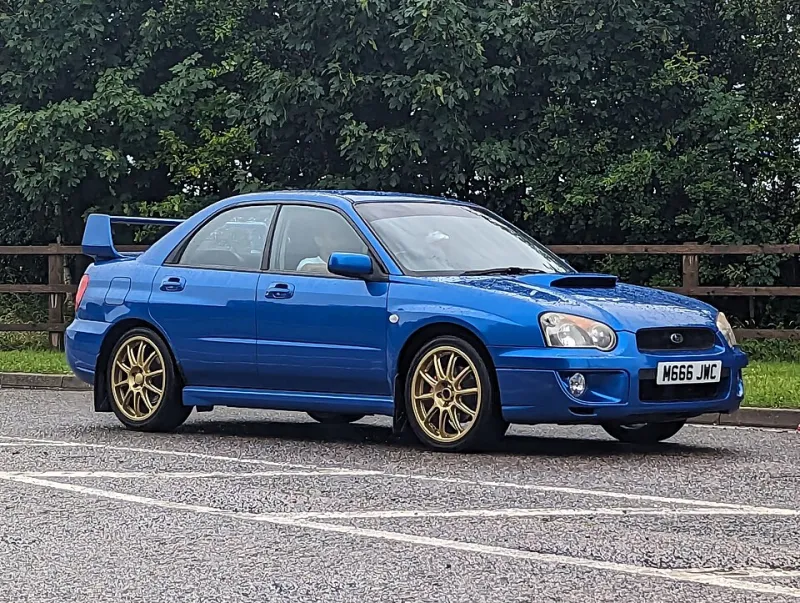
Photo: Calreyn88, CC BY-SA 4.0, via Wikimedia Commons
You pick your WRX up from the tuner, pull out of the lot, and something sounds... different. Not broken-different. More like angry-different. There's a sharper edge to the exhaust note, maybe a whistle or a flutter you didn't notice before, and every time you push past 3,500 RPM it feels like the car is telling everyone within a quarter mile that it means business.
So naturally, your first instinct is to wonder whether that's a good thing or a really expensive thing.
The short answer: it depends entirely on what's making the noise. The longer answer is actually worth understanding, because your wastegate isn't just a mechanical valve — it's one of the more expressive components on your entire turbo setup, and learning to read what it's saying can save you from either panicking over nothing or ignoring something real.
What a Wastegate Actually Does (And Why Tuning Changes Its Behavior)
At its core, a wastegate is a pressure relief valve for your turbo system. When boost builds past a target threshold, the wastegate opens and diverts exhaust gases away from the turbine wheel, preventing the turbo from spinning up beyond what you want. It's the thing standing between a properly boosted run and a blown turbo.
Stock, your WRX's wastegate is calibrated to open at relatively conservative pressures — Subaru has to account for 87-octane fuel, varying climates, and the occasional owner who never reads the manual. When a tuner goes in and raises your boost targets, adjusts your fuel and ignition maps, and tightens up the boost control strategy, the wastegate starts operating differently. It opens at different points in the RPM range, holds closed longer in some scenarios, and cycles more aggressively depending on how the tune handles boost creep and spool.
All of that mechanical behavior has a sound. And that sound changes.
The Whistle: Where It Comes From and What It Means
The high-pitched whistle a lot of tuned WRXs develop is almost always tied to one of two things: the wastegate itself cracking open under pressure, or exhaust gases rushing past the gate at higher velocity than stock.
On an internal wastegate setup — which is what most stock and mildly built WRXs are running — that whistle tends to happen right at the transition point when the gate cracks. You'll often hear it as a brief, sharp tone right around peak boost before the gate modulates. If your tune is running higher boost, the pressure differential across that gate when it opens is larger, and the sound reflects that. More pressure, faster gas movement, louder and more pronounced whistle.
That alone isn't a red flag. It's physics. Higher boost means more energy in the system, and some of that energy expresses itself acoustically. If the whistle is consistent, happens at predictable points in your pull, and goes away cleanly when you lift, you're almost certainly just hearing a healthy system working harder than it used to.
Where it gets concerning is if the whistle becomes erratic — showing up at weird RPM points, changing pitch between pulls, or sticking around when it shouldn't. That can indicate boost control instability, a wastegate that's not seating properly, or a boost solenoid that's not doing its job cleanly. Those are conversations to have with your tuner, not things to tune out.
External Wastegates Are a Whole Different Animal
If you've gone the aftermarket turbo route and you're running an external wastegate — a Tial, Turbosmart, or similar — the acoustic profile is completely different and significantly louder. External gates vent directly to atmosphere (or through a dump pipe back into the exhaust), and that venting is not subtle.
The "screamer pipe" setup, where the external gate vents to open air, produces that iconic high-pitched shriek that sounds like a Formula car having a rough day. It's dramatic, it's attention-grabbing, and in some states it's going to cause you headaches at inspection time because open atmosphere venting on public roads is a gray area in a lot of jurisdictions.
Routing the external gate back into the downpipe quiets things down considerably but still results in a noticeably more aggressive exhaust character than an internal gate setup. If you recently made the jump to an external gate and your car sounds like a completely different machine, that's expected — not a malfunction.
Boost Flutter and Compressor Surge: The Sounds You Don't Want
Not every new noise post-tune is worth celebrating. Two sounds that deserve attention are boost flutter and compressor surge, and while they're related, they're not the same thing.
Boost flutter is that rapid flapping or fluttering sound you hear on a hard lift — essentially what happens when you close the throttle quickly under boost and the pressure wave has nowhere to go. On a recirculating blow-off valve setup (which is stock on most WRXs), that energy gets recirculated and you get a muffled chuff. On an atmospheric BOV, it's louder and more theatrical. Flutter itself isn't always catastrophic, but repeated hard flutter events can stress the compressor wheel over time, so it's worth discussing with your tuner whether your BOV setup is appropriate for your boost levels.
Compressor surge is the one that should get your attention. It sounds less like a flutter and more like a deep, rhythmic chugging or stalling sensation — almost like the turbo is hiccuping. Surge happens when airflow through the compressor stalls, usually because you're operating outside the compressor's efficient range. If you hear that after a tune, especially at lower RPM under load, your tuner needs to know about it. It's not a "cool turbo sound" situation.
So Is Your Car Actually Healthier After the Tune?
In most cases, yes — a well-executed tune that's raising your WRX's boost and refining its fuel and ignition maps should result in a car that sounds more purposeful because it is more purposeful. The wastegate is cycling more actively, the turbo is building and holding boost more aggressively, and the exhaust note reflects all of that.
The key word is "well-executed." A tune that's chasing more boost than your hardware can reliably support, or one that's leaving boost control sloppy to hit peak numbers on a dyno, can produce aggressive sounds that are actually symptoms of instability rather than confidence.
If you're not sure what you're hearing, log it. Most WRX tuning platforms give you access to boost logs, and comparing your actual boost trace to your target boost trace is a much more reliable diagnostic than trying to interpret sounds alone. If your actual boost is tracking your target cleanly and your wastegate sounds are consistent with what your tuner expects, you're probably just experiencing the natural acoustic upgrade that comes with a car that's finally running the way it was always capable of running.
And honestly? That sound is most of the fun.