Running Hot: How Your Stock Radiator Is Quietly Killing Every Tune You've Paid For
Photo: Mr.choppers, CC BY-SA 4.0, via Wikimedia Commons
You spent real money on that tune. Maybe you went full e-tune with a Cobb Accessport, maybe you found a local shop that knows WRXs inside and out. Either way, you saw the dyno numbers, you felt the pull on the highway on-ramp, and life was good. Then summer hit. Or you did a track day. Or you just got stuck in stop-and-go traffic on the way home from work — and suddenly your WRX started pulling timing, stumbling, and feeling nothing like the car that left the dyno.
Here's the thing nobody in the parts-and-tune ecosystem loves to talk about: heat is the silent assassin of modified turbo cars, and the stock cooling setup on most WRX generations wasn't designed with your power goals in mind.
Why Heat Management Isn't Optional on a Tuned WRX
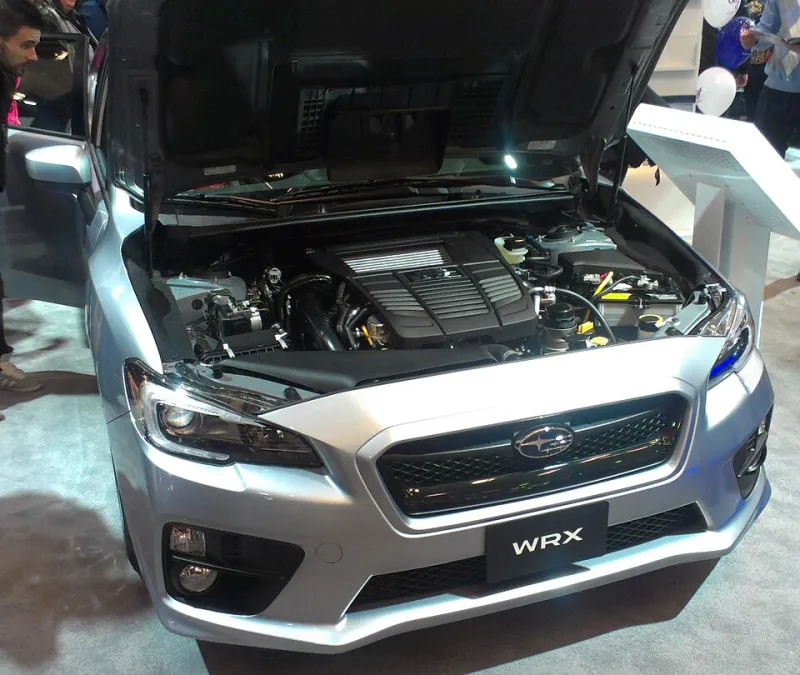
The FA20DIT and the newer FA24 are turbocharged engines running elevated boost, tighter fueling maps, and more aggressive ignition timing than they came from the factory with. All of that translates directly into more heat — in your coolant, in your intake charge, and in your oil. The stock radiator on a base WRX is sized to handle stock power output with a reasonable margin. That margin disappears fast once you start modifying.
Real-world data from WRX owners who've logged temps with an Accessport or AEM data logger tells a pretty consistent story. On an 85-degree day in something like Phoenix or Atlanta, a stock-cooled WRX running a Stage 2 tune will start seeing coolant temps creep past 220°F under sustained load. Once you're there, the ECU starts pulling timing to protect the engine. That means the power you paid for literally vanishes in real time — and your tuner can't fix it, because it's not a tune problem. It's a thermal problem.
At 230°F and beyond, you're not just losing power. You're shortening head gasket life, stressing your thermostat, and creating conditions where detonation becomes a real risk. The FA20 already has a reputation for head gasket sensitivity. Running hot accelerates that timeline considerably.
The Intercooler Problem Is Just as Real
Before we even get to the radiator, let's talk about the front-mount intercooler situation. The stock TMIC (top-mount intercooler) on older WRX generations and the FMIC on newer ones both have the same fundamental issue: heat soak. After a few hard pulls or a few miles of spirited driving, the intercooler core gets saturated with heat and stops doing its job efficiently. Intake air temps climb, charge density drops, and again — the ECU pulls timing.
If you're on a Stage 1 or mild Stage 2 tune and you haven't upgraded your intercooler yet, that's actually your first call before touching the radiator. A quality FMIC like the Mishimoto Performance or the GrimmSpeed Stage 2 unit will drop intake air temps significantly and give your tune room to breathe. Owners running data logs before and after a proper intercooler swap regularly report IAT drops of 30–50°F under sustained boost. That's not a marginal gain — that's your tune actually working the way it was mapped.
What Level of Build Actually Needs a Radiator Upgrade?
This is where it gets nuanced. Not every WRX owner needs to go drop $400 on an aluminum racing radiator. Here's a rough breakdown based on power level:
Stock to Stage 1 (under 300whp): If you're in a moderate climate and not tracking the car, the stock radiator can hold up — but you should be logging temps regularly. Add a quality coolant like Subaru's Super Coolant or a 50/50 Evans mix, and make sure your cooling fans are functioning properly. Don't ignore the cheap stuff.
Stage 2 to Stage 2+ (300–350whp): This is the gray zone. Guys in the Pacific Northwest often get away with stock cooling longer than people in Texas or Florida. But if you're seeing consistent temps above 210°F in normal driving, it's time to look at an upgraded radiator. Mishimoto, CSF, and Koyo all make solid direct-fit options in the $250–$450 range. The CSF all-aluminum unit in particular has gotten strong reviews from the WRX community for its fitment and real-world performance.
Big Turbo and beyond (350whp+): At this level, upgraded cooling isn't optional — it's part of the build. You need a thicker-core radiator, and you should seriously consider an oil cooler as well. Transmission temps also become a concern on cars with high-output builds that see track use. Some builders in this range also add a coolant overflow tank upgrade to handle the increased thermal cycling.
Why So Many Owners Ignore This Until Something Breaks
Honestly? Because cooling upgrades aren't exciting. Nobody posts a picture of their new radiator on Instagram. You can't feel a radiator upgrade the way you feel a tune or a downpipe. The gains are invisible right up until the moment you're not losing power on a hot day — and that's a hard thing to get excited about proactively.
There's also a sequencing problem. Most enthusiasts build their WRX in the "fun" order: tune first, intake, exhaust, maybe coilovers. Cooling gets pushed to the back of the list because it doesn't feel like a performance upgrade. But the shops that build WRXs for track use or for customers who want reliability alongside power will tell you the opposite: sort your thermals first, then build on top of a stable foundation.
The catastrophic version of ignoring this is a blown head gasket or a warped head — repairs that run $2,000 to $4,000 depending on your area and how far the damage went. The non-catastrophic version is a tune that never performs the way it should because the engine is constantly heat-managing itself into mediocrity.
Practical First Steps If You're Running Hot
If you've got an Accessport, start logging coolant temps and IATs if you aren't already. Cobb's monitoring setup makes this straightforward, and knowing your actual numbers is the only way to diagnose what's really happening. If you're consistently seeing coolant temps above 210°F in normal driving or IATs above 120°F under boost, you've got a thermal issue that no tune revision is going to fix.
From there, prioritize in this order: intercooler first if you're on a top-mount or a stock FMIC, then radiator if temps are still climbing, then oil cooler if you're pushing serious power or tracking the car. Add a quality coolant flush with the right mix at every step.
Your tune is only as good as the environment it's operating in. Give your WRX the thermal headroom it needs, and those power numbers you saw on the dyno might actually show up every time you get on it — not just on a cool morning in March.