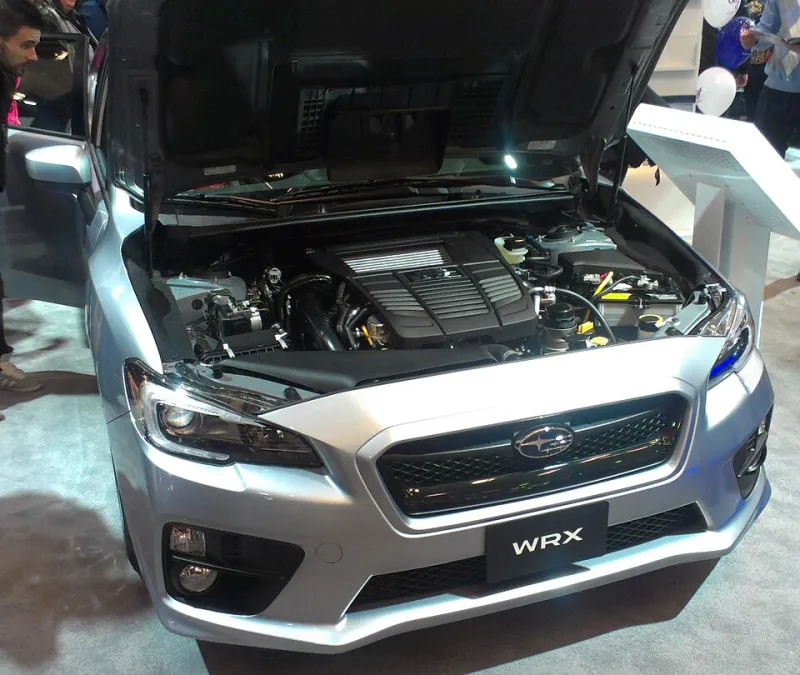
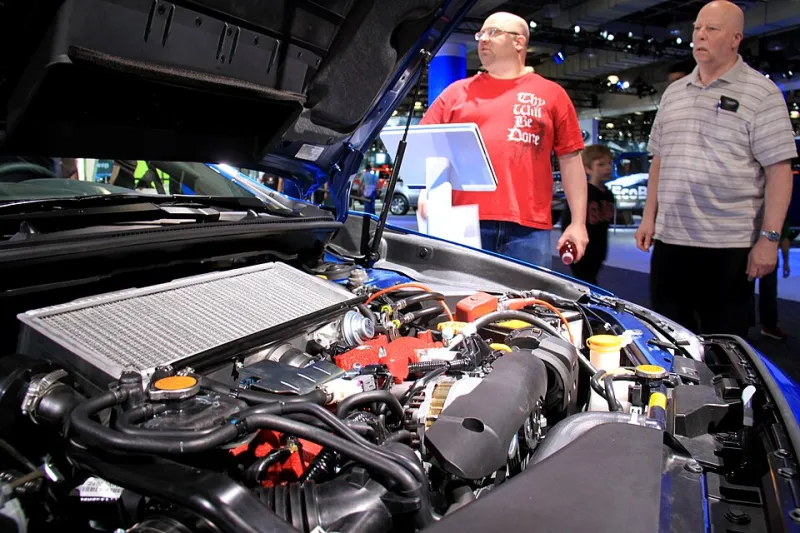
Tuned and Trustworthy: Keeping Your Modified WRX From Becoming a Full-Time Money Pit
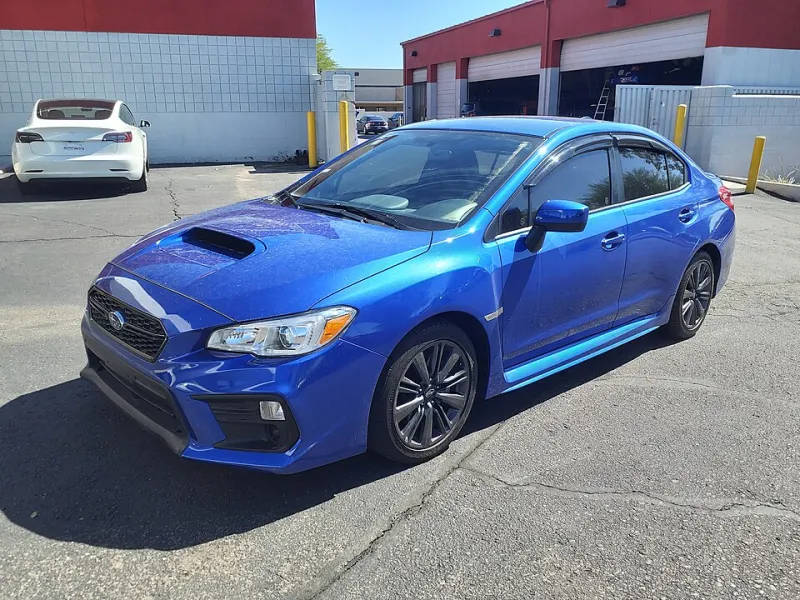
Photo: HJUdall, CC0, via Wikimedia Commons
Let's be honest about something. The WRX community has a romanticized relationship with the phrase "project car." On paper, it sounds like weekends in the garage, satisfying upgrades, and progressively better lap times. In practice, for a lot of owners, it eventually means a car that's in the shop more than it's in the driveway, an oil-stained credit card statement, and a creeping suspicion that you should've just bought a Civic.
None of that has to be your story. But avoiding it requires some intentional thinking about how you build and how you maintain what you've built. This isn't a guide for the guy building a dedicated race car — it's for the rest of us, the daily drivers who want real performance without real consequences.
The Modification Sequencing Problem
One of the most common mistakes WRX owners make is modifying out of order. It sounds obvious when you spell it out, but the temptation to go straight for the exciting stuff — bigger turbos, aggressive tunes, intake and exhaust — before addressing the supporting cast is genuinely hard to resist.
Here's the thing: your WRX is a system. When you add power, every component downstream of that power source takes on more stress. Fuel injectors that were fine at 280 whp start struggling at 320. The clutch that felt great on a stock car starts slipping when you've got a stage 2 tune and you're launching at every on-ramp. Cooling systems that were engineered for factory boost levels get stressed when you're running higher PSI on a hot July afternoon in Phoenix.
The boring-but-correct sequencing looks something like this: cooling upgrades, fueling, clutch (if you're on a manual), then boost and tune. Suspension and brakes are their own parallel track and should keep pace with your power gains — there's no point going faster if you can't stop or corner.
Doing it in the right order means each upgrade actually works as intended and doesn't create a new failure point somewhere else.
Maintenance Intervals on a Modified Car Are Different
This one gets people. If you've added boost, changed the tune, or upgraded the fueling system, your factory maintenance schedule is no longer fully relevant. Subaru wrote those intervals for a stock engine living a stock life.
Oil changes are the big one. Most serious WRX tuners recommend cutting the interval down to 3,000–4,000 miles if you're running a stage 2 or higher tune and driving the car hard. The FA20 in particular has a documented sensitivity to oil quality and change frequency — it's not a forgiving engine when oil breaks down. Use a quality full synthetic, don't cheap out on the filter, and actually stick to the interval.
Spark plugs are another area where the factory schedule gets thrown out the window once you're running elevated boost. On a tuned car, inspect them at 15,000 miles and replace on a schedule your tuner recommends based on your specific setup. Running old plugs on a high-boost tune is a fast way to experience knock — and knock on a boosted flat-four is a fast way to experience an expensive rebuild.
Also worth noting: if your car sees track days or spirited driving events, treat each one like it adds mileage to your maintenance clock. A hard autocross day is not the same as 50 miles of highway commuting.
Know Your Failure Points Before They Know You
Every heavily modified WRX has a few predictable weak links, and being aware of them ahead of time is the difference between a planned repair and a roadside disaster.
The FA20 ringland issue is the most infamous. This engine does not like lean conditions, sustained high load at low RPM under boost, or poor fuel quality. If you're tuned for 91 and accidentally run a few tanks of 87, you're gambling. Running E30 or E85 blend significantly reduces this risk, but requires proper fueling support and a tune built for it.
The transmission on manual cars takes a beating from aggressive launches and high-torque tunes. The stock gearbox is reasonably robust at stage 1 power levels, but if you're pushing stage 2 and beyond, treating every stoplight like a drag race will shorten its life noticeably. It's not a question of if, it's when.
Intercooler heat soak is a real-world issue on hot days that often gets overlooked. A front-mount intercooler upgrade isn't just about peak power — it's about consistency. If your car feels strong in the morning and sluggish by noon on a hot day, you're experiencing heat soak. It's also a reliability concern, since charge air temps directly affect knock threshold.
The "When Did This Stop Being Fun" Conversation
Somewhere between your first intake install and your third transmission rebuild, you might find yourself having a quiet conversation with yourself about whether this car is still serving you or whether you're serving it.
Some signs you've crossed the line:
- You're declining invitations to drive because you're not sure the car will make it back
- Your repair bills in the last 12 months exceed what the car is worth
- You're chasing a reliability problem that keeps morphing into a different reliability problem
- The mods you've done have made the car significantly harder to live with daily (heat, noise, rough idle, cold start issues)
None of this means give up. It might mean stepping back and doing a proper assessment of where the car actually is versus where you want it to be. Sometimes the right move is simplifying — pulling back a stage on the tune, going back to a more streetable setup, and rebuilding from a more stable foundation.
The Mindset That Actually Works
The WRX owners who seem to get the most out of their builds over the long haul tend to share a few things in common. They're patient with the sequencing. They find a tuner they trust and stick with them rather than chasing dyno numbers on different software every six months. They treat maintenance as part of the performance budget, not a separate annoying expense. And they're honest with themselves about what they actually need the car to do.
A tuned WRX that starts every morning, pulls hard when you ask it to, and doesn't leave you stranded on I-95 is more satisfying than a 400-whp car that's perpetually half-assembled in a garage.
Build smart, maintain consistently, and the thrill will still be there on day 1,000.