A Full Year of Track Days on Stock WRX Brakes: Every Dollar Spent, Every Fade Felt
Photo: Kallemax at English Wikipedia, Public domain, via Wikimedia Commons
Every WRX owner who's done a track day has heard it: "You need a big brake kit before you go back out there." Usually from a guy whose fastest lap is set in the paddock. So we decided to run the experiment properly — a full year of HPDE days on completely stock calipers and rotors, tracking every dollar, every pad change, and every moment the brakes told us they'd had enough.
The Setup
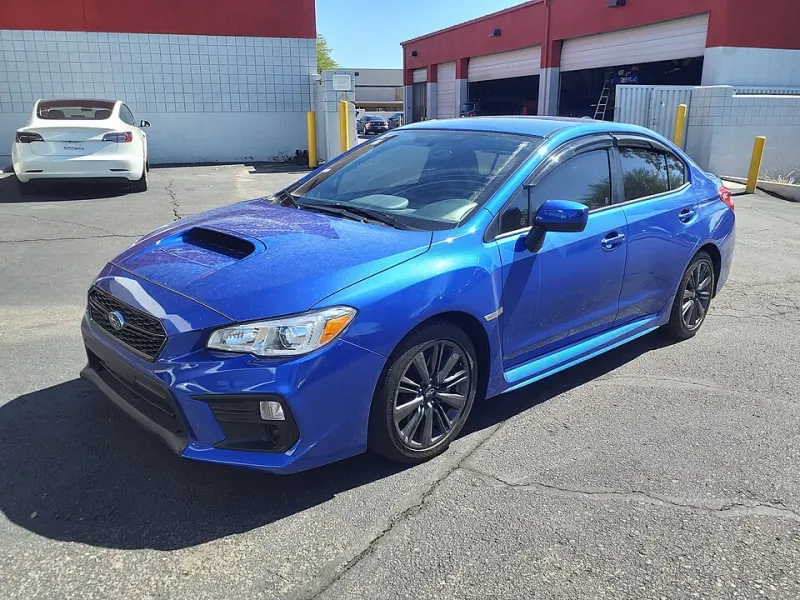
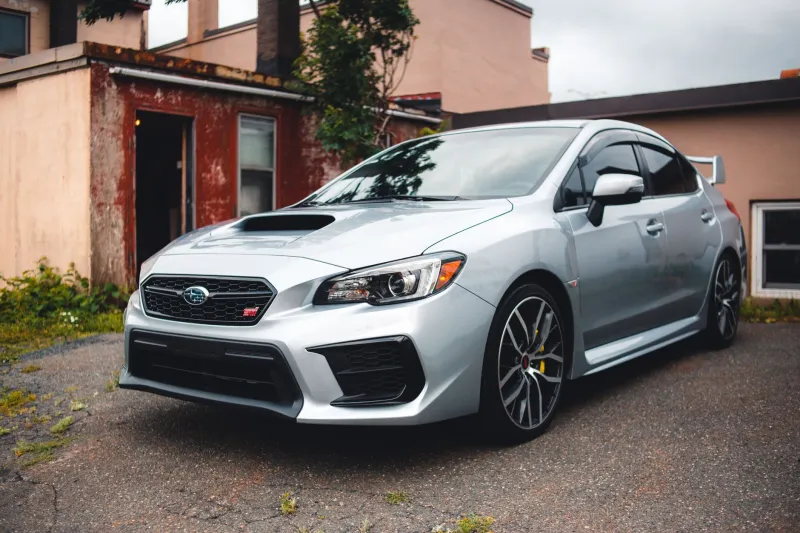
The car: a VA WRX with around 45,000 miles, stock brakes front and rear, running Continental ExtremeContact Sport tires. The only brake-related modification all year was fluid — and that turned out to be the most important decision we made.
Over twelve months we completed eight track days across three different tracks, mostly in the intermediate run group, plus about 6,000 miles of spirited street driving. Everything was logged: pad thickness measurements after each event, fluid changes, and notes on when and where fade showed up.
What Fade Actually Felt Like
The first real fade arrived on day two, mid-afternoon during a back-to-back session set. It wasn't dramatic — no pedal to the floor, no horror story. The pedal just got longer and the initial bite softened, right around the second half of a 20-minute session at a track with two heavy braking zones.
Here's the thing though: that fade was pad fade and fluid fade, not a failure of the calipers themselves. The stock calipers never complained. What we learned fast is that fade on a stock-brake WRX is almost entirely a consumables problem, not a hardware problem.
The Money, Line by Line
- Performance street/track pads (front and rear), three sets over the year: $780 total. We ran a mid-tier compound like a Ferodo DS2500 or Hawk DTC-60 style pad. One set lasted roughly two track days plus street driving.
- Rotors: one front set replaced mid-season after pad material built up and caused shudder: $340.
- Brake fluid: four full flushes at $45 each in fluid, done ourselves: $180. This is non-negotiable. On stock fluid, we'd have boiled it on day one.
- Stainless lines: $160, installed once. Worth it for pedal feel alone.
- Track-day consumables (fuel, pads bedding, misc.): not brakes, but real money regardless.
Total brake-specific spend for a full season: roughly $1,460.
Compare that to a quality big brake kit — $2,500 to $4,500 for a decent four-piston setup with two-piece rotors — plus pads for it, which cost more per set than the stock-size equivalents.
When the Big Brake Kit Finally Makes Sense
By the end of the year, we had a clear answer. The stock setup earned its keep through intermediate-level riding. The moment it stops making sense is when you can honestly say two things: you're running advanced-level sessions with sustained 20-plus minute stints, and you're going through pads so fast that consumable costs exceed $1,500 a season. At that point, a BBK with bigger thermal mass and cheaper-per-lap pad wear starts paying for itself — usually around year two or three of serious use.
There's one more scenario: heavy cars with heavy drivers at heavy tracks. If you're adding 200 pounds of passengers and gear, or running a track with a single massive braking zone, stock rotors will crack eventually. That's physics, not opinion.
What We'd Do Differently
If we ran it back, the order of operations stays the same: good fluid first, stainless lines second, proper track pads third, and tires before any of it — because our lap times improved more from a tire compound change than anything else all year. The big brake kit can wait. It's the last $3,000 you should spend, not the first.
The stock WRX brakes are better than their reputation. They just need the right consumables and a driver honest enough to admit when the problem is the right foot.