Squeezing Real Power from 93 Octane: A WRX Tuning Guide for the Rest of Us
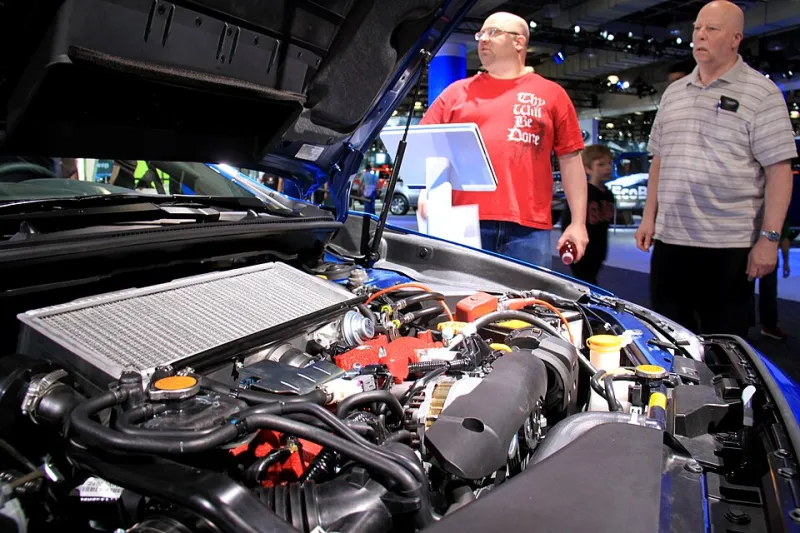
Photo: Joseph Brent, CC BY-SA 2.0, via Wikimedia Commons
E85 is the internet's favorite answer to every WRX power question. And look — it's not wrong. Ethanol fuel opens up serious headroom for boost and timing advance, and the numbers it produces on a dyno are genuinely impressive. But here's the reality: E85 infrastructure in the US is still patchy at best. If you're in rural Tennessee, coastal Maine, or large chunks of the Southwest, your nearest E85 pump might be 60 miles away. Even in cities where it's available, the fuel economy hit and the logistics of running a flex-fuel setup aren't for everyone.
So let's talk about what the other 90% of WRX owners can actually do — the folks running 93 octane premium from whatever station is closest to their house. Spoiler: there's more on the table than you might think.
Realistic Expectations Before You Spend a Dime
First, a reality check. A stock FA20DIT WRX (2015–2021) makes somewhere in the neighborhood of 250–260 whp on a hub dyno in real-world testing conditions — the factory 268 hp rating is a crank figure. On a properly executed 93 octane Stage 1 tune alone, most owners see numbers in the 280–295 whp range. That's a meaningful jump without touching a single hardware component.
Push it to a Stage 2 setup with supporting bolt-ons, and you're looking at 310–330 whp on pump gas, depending on conditions, elevation, and how dialed-in your tune is. These aren't wild claims — they're consistent with dyno sheets from well-regarded tuners like Cobb, EcuTek-based shops, and ProTune setups across the country.
What 93 octane won't give you is the 380+ whp territory that E85 unlocks. That ceiling is real, and it's enforced by the fuel's knock resistance. But for a street car that still needs to pass emissions and survive daily driving, the 93 octane ceiling is honestly plenty.
Stage 1: The Tune-Only Baseline
If you haven't tuned your WRX yet, this is where you start. A Stage 1 map — whether you're running an off-the-shelf Cobb Accessport map or a custom remote tune through a platform like EcuTek — optimizes ignition timing, boost targets, and fueling for 93 octane without requiring any hardware changes.
What you're actually gaining here is recovery from Subaru's notoriously conservative factory calibration. The OEM tune leaves a significant amount of timing on the table as a buffer for markets where 91 octane is the premium fuel standard. On 93, a good tune can reclaim that timing safely.
Expect to spend $400–$700 for an off-the-shelf Accessport setup, or $500–$900 for a custom remote tune from a reputable shop. Custom is worth the extra money — a tuner who can see your specific car's data logs will find power and safety margins that a generic map can't.
Stage 2: The Bolt-On Package That Actually Matters
Once you've got a tune, the next layer of gains comes from reducing restriction in the intake and exhaust. On the FA20DIT, the three components that move the needle most are the downpipe, the intake, and the intercooler.
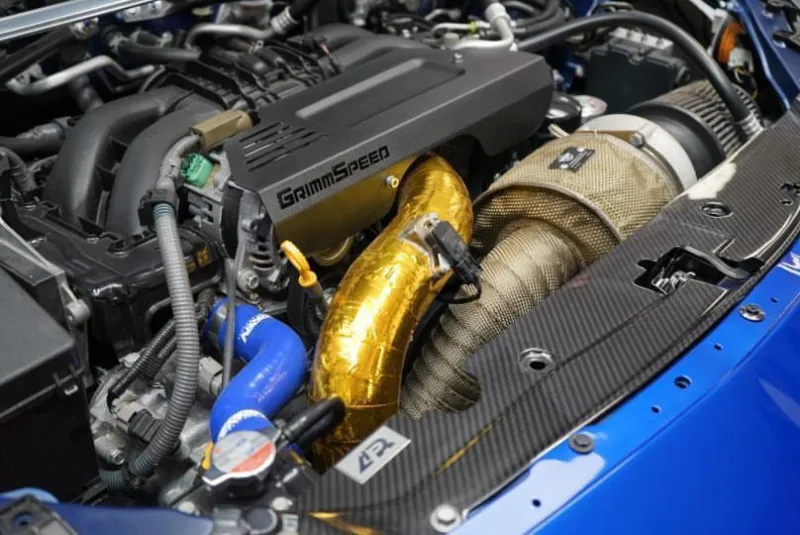
Downpipe: A catted or catless aftermarket downpipe is the single biggest bolt-on power adder on this platform. It reduces backpressure dramatically, which allows the turbo to spool faster and the engine to breathe more freely at high RPM. On 93 octane with a supporting tune, a good downpipe (Invidia, Grimmspeed, and COBB are popular choices) is worth 20–30 whp on its own. Keep in mind that catless pipes will trigger a CEL and may fail emissions in your state — a high-flow catted option keeps things street-legal.
Intake: The stock airbox is actually reasonably competent, but an aftermarket intake — particularly a cold air or short ram design from a reputable brand — helps with intake temps and can add 5–10 whp when tuned for. Intake temps matter more on 93 octane because heat reduces the fuel's effective octane rating, which brings knock risk up. Cooler intake air = more timing = more power.
Intercooler: The stock TMIC (top-mount intercooler) on the WRX is a known weak point under sustained performance driving. It heat-soaks relatively quickly, and once it does, your tune pulls timing to protect the engine. A front-mount intercooler (FMIC) swap, like the Grimmspeed or Cobb unit, keeps charge temps dramatically lower and allows the tune to hold its numbers lap after lap, or pull after pull. This is especially important in hot climates.
Tuning Strategy: What a Good 93 Octane Map Actually Looks Like
A well-built 93 octane tune isn't just about cramming in as much timing as the fuel will tolerate. The best tunes on this platform balance peak power with a flat, usable torque curve — the kind of power delivery that feels strong everywhere, not just at a specific RPM.
Your tuner should be targeting charge air temps and making sure the map pulls timing gracefully when conditions get hot, rather than holding aggressive numbers until knock occurs. Feedback knock and fine knock learning behavior should be minimal on a well-calibrated car. If your car is consistently pulling timing on the street, your tune is either too aggressive or your supporting mods aren't keeping up.
Dyno sessions should include multiple pulls at operating temperature — not just cool, favorable runs. Power figures mean a lot more when they're repeatable.
The Supporting Mods That Protect Your Investment
Power is only worth having if the engine can handle it long-term. On 93 octane at Stage 2 power levels, a few supporting changes make a real difference in reliability.
Upgraded spark plugs — specifically one heat range colder than stock — are cheap insurance at elevated boost levels. An oil catch can keeps crankcase vapors out of the intake tract, which is a known issue on the FA20 that can contribute to carbon buildup and knock sensitivity over time. And if you're pushing hard on track days, consider an upgraded oil cooler to keep temps in a safe range.
What the Dyno Actually Tells You
Numbers on paper are one thing, but the dyno sheet tells a more complete story. A healthy 93 octane Stage 2 WRX should show a smooth, progressive power curve with peak torque arriving early in the RPM range and holding reasonably flat through the mid-range. A lumpy or inconsistent curve usually points to a tune that's fighting the car rather than working with it.
If you're pulling 310–325 whp on a good day at an honest dyno, you're in a great spot. That's a car that's noticeably faster than stock in every real-world situation, runs on fuel you can buy anywhere in the country, and doesn't require a dedicated ethanol supply chain to keep on the road.
The 93 Octane Ceiling Is Higher Than You Think
E85 will always win in a straight-up power comparison. But for the WRX owner who wants maximum performance from what's available at the pump, 93 octane with the right combination of tune and supporting hardware delivers a genuinely fast, reliable street car. The 310–330 whp range is a sweet spot — enough to feel like a completely different vehicle from stock, without pushing into territory where reliability becomes a daily concern.
For most of us, that's exactly where we want to be.