What Your WRX Transmission Is Really Doing to Its Resale Value
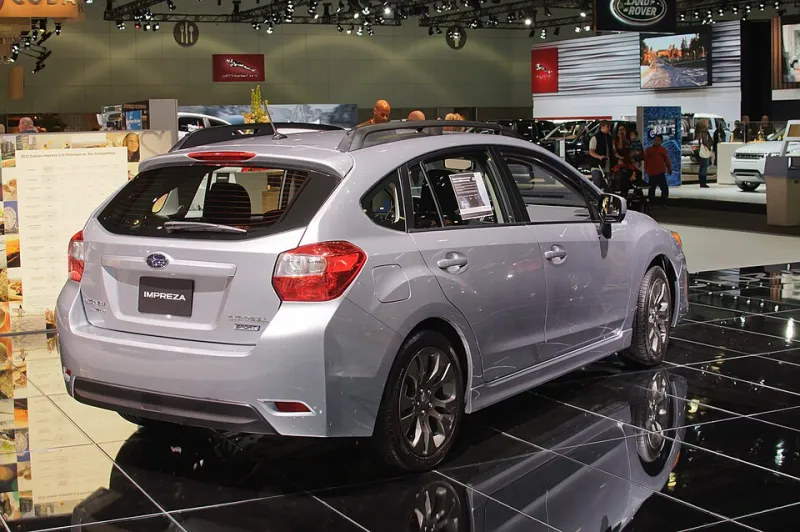
Photo: skinnylawyer from Los Angeles, California, USA, CC BY-SA 2.0, via Wikimedia Commons
If you've spent any time on WRX forums, you already know the manual vs. CVT debate gets heated fast. Purists swear by the six-speed. Commuters and newer buyers lean toward the continuously variable transmission that Subaru introduced for the 2015 model year. But here's the thing — most of that argument lives in the emotional lane. What rarely comes up is the cold, hard financial reality of what your transmission choice is doing to your car's long-term worth.
We did the legwork. We pulled listings from major used car platforms, talked to dealers in markets ranging from Chicago to Phoenix to Atlanta, and broke down the real depreciation curves for both variants. What we found might actually change how you think about your next trade-in.
The Market Snapshot: Manual WRXs Are Holding Stronger
Let's start with the numbers. Across listings on CarGurus, Autotrader, and private party sales on Facebook Marketplace, manual-transmission WRXs from the 2015–2021 generation consistently command a $1,200 to $2,500 premium over comparable CVT models with similar mileage and condition. That gap widens further once you get into higher-mileage examples — think 80,000 miles and up.
Why? Demand. The WRX has always attracted a driving-focused crowd, and that buyer pool skews heavily toward people who specifically want a clutch pedal. When a clean manual WRX hits the used market, it moves. CVT cars sit longer, which forces dealers to cut prices.
"I've had CVT WRXs sit on the lot for six to eight weeks before we had to drop the price twice," said one used car manager at a Subaru dealership in the Dallas-Fort Worth area who asked not to be named. "A manual in decent shape? Sometimes it's gone in a weekend."
The CVT's Reliability Problem Is Priced In
Here's where it gets uncomfortable for CVT owners. The Subaru Lineartronic CVT used in the WRX has a documented history of premature failure — particularly in cars that have been driven aggressively or that were maintained on irregular schedules. CVT replacements can run anywhere from $4,000 to over $7,000 at a dealership, and even independent shops aren't exactly cheap on this job.
Savvy used car buyers know this. When they see a high-mileage CVT WRX, they're already mentally discounting the price by the potential cost of that repair. That depreciation isn't imaginary — it's baked into the market.
Manuals, by contrast, are comparatively bulletproof when maintained properly. Clutch replacements are a known cost, typically in the $600–$1,100 range at an independent shop, and the transmission itself is robust enough that major failures are far less common. From a total cost of ownership standpoint, the math tilts heavily toward the stick shift.
Does a CVT Swap Even Make Sense?
Short answer: almost certainly not. The cost of swapping a CVT out for a manual — or vice versa — is prohibitive for most owners. You're looking at sourcing a compatible transmission, a complete pedal assembly, ECU recalibration, new driveshaft components, and significant labor hours. Estimates from shops that have done this kind of work put the all-in cost north of $8,000 to $12,000 in most cases.
Unless you've got a very specific reason (say, you bought a CVT car cheap and plan to build a track car), the economics just don't support it. You'd spend more on the swap than you'd recoup in added resale value.
Regional Variations Worth Knowing
The manual premium isn't uniform across the country. In markets with heavy snow — think Minneapolis, Denver, or Buffalo — the CVT actually closes the gap a bit because some buyers prefer the automatic behavior in winter driving. Dealers in those markets report that the price difference narrows to around $800–$1,200 on comparable cars.
In warmer, more performance-oriented markets like Southern California, Texas, and Florida, the manual premium holds strong or even stretches wider. The buyer demographics in those areas skew younger and more enthusiast-focused, which keeps demand for three-pedal cars elevated.
What This Means If You're Holding a CVT WRX Right Now
If you're currently driving a CVT WRX and thinking about trading up, timing matters. The sweet spot for getting the most value out of a CVT WRX is before you hit the 60,000-mile mark. Once buyers start calculating potential transmission risk, offers drop fast.
Keep your CVT fluid changes on a tight schedule — every 30,000 miles is the conservative recommendation, not the 60,000 Subaru suggests in the manual. A documented service history showing regular CVT fluid changes will legitimately help you at trade-in time because it signals to buyers and dealers that the transmission has been cared for.
For manual owners, the advice is simpler: hold it. Clean, well-maintained manual WRXs continue to appreciate relative to the broader used car market correction happening right now. The enthusiast market for these cars is durable, and the supply of unmodified, well-kept examples is only shrinking.
The Bottom Line
Transmission choice isn't just about how your WRX feels to drive — it's a financial variable with real consequences at trade-in time. The manual holds its value better, costs less to maintain over a long ownership window, and attracts a buyer pool that's willing to pay a premium. The CVT offers convenience but carries depreciation risk that grows with every mile on the odometer.
If you're shopping for a used WRX right now, the data points clearly toward the manual. If you're already in a CVT, stay on top of maintenance and plan your exit before the high-mileage discount kicks in. Either way, knowing what the market actually thinks about your transmission is information worth having.