Modified WRX on the Market? Here's Which Mods Buyers Actually Pay More For (And Which Ones Send Them Running)
Selling a modified WRX is a different experience than selling a stock one. You're not just pricing a car — you're pricing a build, and the used market has very specific opinions about which builds are worth paying for and which ones are a liability. Get it wrong and you're either leaving money on the table or watching your listing sit for months while comparable stock cars move in days.
The good news is that the market isn't random. There are clear patterns in what buyers respond to, and if you understand those patterns before you spend money on your next upgrade, you can make decisions that work for your wallet as much as your weekend track day.
What Buyers Are Actually Scared Of
Before getting into what adds value, it's worth understanding the baseline fear that every used WRX buyer walks in with: the unknown. A modified car is, by definition, a car that someone else had opinions about. And buyers — especially ones who've been burned before — assume the worst until proven otherwise.
The modifications that trigger the most buyer anxiety are the ones that suggest the car was driven hard and maintained poorly. Engine internals work, aggressive turbo upgrades, and suspension modifications done without documentation are the biggest red flags. It's not that buyers don't want a fast car — they do. It's that they can't verify whether the build was done right, and that uncertainty gets priced in as a discount.
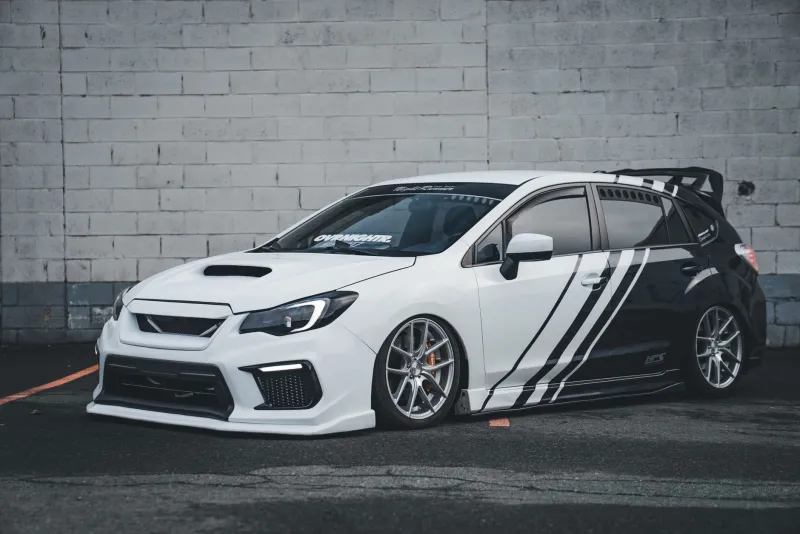
Cosmetic modifications are a different kind of problem. Wide-body kits, non-OEM hood scoops, and aggressive aero packages that don't match the rest of the car's build level signal that the previous owner prioritized looks over function. That's not universally bad, but it narrows your buyer pool significantly, and a smaller buyer pool means lower offers.
The Modifications That Buyers Actually Pay a Premium For
Quality wheel and tire packages are one of the clearest value-adds in the used WRX market. A set of well-known forged wheels — Enkei, Volk, BBS, Gram Lights — mounted on quality performance tires in good condition can genuinely move the needle on price, especially if the stock wheels are included. Buyers see this as a ready-to-go upgrade they don't have to source themselves. The key is condition. Curbed, corroded, or mismatched wheels have the opposite effect.
Coilovers with documentation are another legitimate value-add, but only under specific conditions. The brand matters enormously. Bilstein, KW, Ohlins, and BC Racing have name recognition that buyers trust. No-name coilovers from overseas suppliers, or coilovers that are visibly worn or leaking, are a red flag. If you're running quality coilovers and you have the stock suspension to include with the sale, you're in a strong position.
A documented ECU tune from a reputable shop is interesting — it can add value, but it depends heavily on what else has been modified. A Cobb Accessport with a reliable off-the-shelf map on an otherwise stock engine is a reasonable selling point. A full custom tune on a heavily modified motor with no paperwork is the kind of thing that makes buyers reach for their phone to call their mechanic before they even drive it.
Intake and exhaust upgrades from recognized brands — Invidia, GrimmSpeed, Cobb — are generally neutral to mildly positive. Buyers expect some level of bolt-on work on a used WRX. A clean, professionally installed intake and cat-back from a quality brand doesn't hurt you, and on the right buyer, it's a mild positive.
The Mods That Quietly Kill Your Asking Price
Engine internals work is the single biggest value killer in the used WRX market. Even if the work was done correctly by a reputable builder, the moment you mention forged pistons, a built bottom end, or head work, a significant portion of buyers mentally subtract several thousand dollars from what they're willing to offer. The reasoning is straightforward: they can't verify it, they can't warranty it, and they've heard enough horror stories about rebuilt WRX motors to be cautious.
Turbo upgrades beyond the factory unit carry similar baggage. A big turbo swap signals to buyers that the car was pushed hard, and unless you have a complete paper trail — receipts, dyno sheets, oil change records — you're going to struggle to get fair market value for the work you put in.
Aggressive suspension modifications without the stock parts are a real problem. Buyers who want a daily driver or a light track car don't want to be locked into your corner-weighted, aggressive-alignment setup. If you sold the stock suspension when you installed your coilovers, you've narrowed your buyer pool to enthusiasts who share your exact vision for the car — and that's a small group.
Vinyl wraps and custom paint are almost always a net negative unless the execution is exceptional. Even high-quality wraps raise questions about what's underneath, and custom paint colors dramatically limit your audience. If you're planning to sell within a few years, keep the exterior stock or as close to it as possible.
The Documentation Multiplier
Here's something the data consistently supports: documentation is worth real money. Two identical WRXs with identical modifications will sell for meaningfully different prices if one has a full folder of receipts, dyno sheets, and service records, and the other doesn't. Buyers pay for confidence, and paperwork is confidence.
If you're modifying your WRX with any intention of eventually selling it, start a folder right now. Keep every receipt, every dyno sheet, every alignment printout. Take photos of the build process. That folder is worth more than the cost of any single upgrade on the car.
The Bottom Line for Strategic Builders
If you're building a WRX with one eye on resale, the safest strategy is quality over quantity. A few well-chosen, well-documented upgrades from recognized brands — good wheels, quality suspension, a clean intake setup — will serve you better than a comprehensive build that buyers can't verify or undo. Keep the stock parts. Keep the receipts. And when it comes time to sell, lead with the documentation, not the dyno numbers.