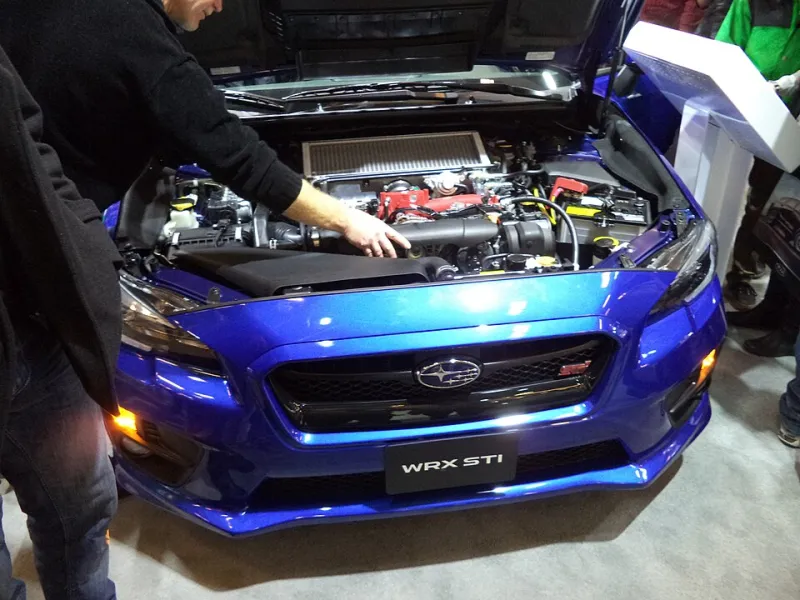
Your Dyno Sheet Is Lying to You — Here's What Those Numbers Actually Mean on the Street
Photo: Victorian Railways photograph, Public domain, via Wikimedia Commons
There's a certain ritual that happens after a tune. You pull off the dyno, the operator hands you a printout, and you spend the next twenty minutes staring at a peak horsepower figure like it's your new identity. Maybe you post it. Maybe you argue about it in a forum thread. Maybe you genuinely believe your WRX is now a different animal.
Then you drive home, get on the freeway, and something doesn't quite add up.
The pull feels... similar. Not dramatically different. Not 340-wheel-horsepower different. And now you're wondering if you got ripped off, if the tune is bad, or if you're just not feeling it right.
Here's the honest answer: the dyno didn't lie exactly, but it didn't tell you the whole truth either.
SAE Net vs. Gross Horsepower — A Number Game With Roots in the '60s
Before we even get to the dyno itself, it's worth understanding that horsepower as a measurement has a messy history. For decades, American automakers rated their engines using "gross" horsepower — a figure measured with the engine stripped of accessories like the alternator, power steering pump, air filter, and exhaust restrictions. It made numbers look great on paper and in showroom brochures.
The Society of Automotive Engineers eventually pushed through the SAE net standard, which measures power with all accessories installed and functioning under more realistic conditions. Subaru uses SAE net ratings for the WRX, so the factory 271 or 228 horsepower figure you see in the spec sheet is already a more honest number than what you'd have seen on a muscle car sticker from 1969.
But that doesn't mean every dyno shop operates on the same standard. Some use correction factors, some don't. Some apply SAE J1349 correction, others use STD or even their own in-house baseline. Two dynos in the same city can show meaningfully different numbers for the exact same car on the exact same day.
The Dyno Operator Is Part of the Equation
This part doesn't get talked about enough. A dyno isn't a passive measuring device — it's a tool that requires a skilled operator making judgment calls throughout the pull. Strapping a car down incorrectly, choosing the wrong gear, picking the wrong RPM range to start the pull, or letting the car run too hot before testing can all skew results.
Beyond technique, there's also the matter of what the operator wants the results to look like. A shop that sells tunes and advertises their work based on big dyno numbers has a financial incentive to present the most flattering output possible. That doesn't mean every shop is gaming the system, but it's worth knowing that the same car can show 20 to 30 horsepower differences depending on who's running the test and how.
If you're getting a tune done and the shop hands you a number that seems suspiciously high, ask them what correction factor they used. If they can't answer that clearly, take the number with a grain of salt.
Ambient Conditions Do More Than You Think
Dyno pulls are sensitive to temperature, humidity, and altitude in ways that translate directly to power output. Cooler, denser air means more oxygen in each intake charge, which means more fuel can be burned, which means more power. A pull done on a crisp 50-degree morning in Denver produces a different result than one done on a 95-degree July afternoon in Phoenix.
Most modern dynos apply atmospheric correction to normalize results, but the correction formula used matters. And even with correction applied, a turbocharged engine like the FA20 in your WRX responds to ambient conditions in ways that naturally aspirated correction formulas don't fully account for. Boost pressure, intercooler efficiency, and intake air temperature all interact in ways that make the math messier than it looks.
On the street, your car is dealing with whatever the weather actually is. That 340whp pull happened in a controlled shop environment. Your Tuesday morning commute is not a controlled environment.
Wheel Slip, Drivetrain Loss, and the Numbers That Disappear
When a front-wheel-drive car gets dynoed, only the front wheels are on the rollers. When an all-wheel-drive car like your WRX gets tested, the setup matters a lot more. Running all four wheels on the dyno is the right approach for AWD vehicles, but not every shop has the equipment or setup to do it correctly. Some shops use a two-wheel dyno with a load simulated for AWD, which introduces its own set of assumptions.
Then there's drivetrain loss — the power that gets eaten up by the transmission, driveshaft, differentials, and axles before any of it reaches the wheels. On the WRX's symmetrical AWD system, that loss is real and it's not small. Estimates typically range from 15 to 20 percent, sometimes more depending on fluid temperatures and component wear. That means your engine might be making 300 horsepower at the crank while the wheels are seeing considerably less.
Dyno numbers are wheel horsepower, not crank horsepower, which is already accounting for drivetrain loss — but wheel slip on the rollers, improper tie-down tension, and AWD coupling behavior can all introduce variability that inflates the reading.
So What Should You Actually Expect?
None of this means dynos are useless. They're genuinely valuable for comparing before-and-after results on the same car, on the same dyno, on the same day. That's where they shine. If your tune added 40whp on a consistent dyno versus your baseline pull, that delta is meaningful even if the absolute number is suspect.
What you shouldn't do is compare your dyno sheet to someone else's from a different shop, different day, and different conditions and draw conclusions about who has the faster car. That argument is almost never settled by paper.
On the street, expect your WRX to feel less powerful than the dyno implied. Not because you got cheated, but because real roads have heat soak, real ambient temperatures, real drivetrain behavior under load, and none of the controlled conditions that made that pull look clean. A car that dynos at 320whp and pulls hard in real traffic is a better outcome than one that hits 360whp on a single cool-air pull and then heat soaks into mediocrity on every subsequent run.
Reading the Sheet Like Someone Who Knows Better
When you're looking at a dyno chart, focus on the power curve, not just the peak. A broad, flat torque curve that builds early and holds through the rev range is going to feel stronger and more usable than a peaky setup that spikes at redline. The WRX's FA20 responds well to tunes that prioritize midrange pull, and that shows up on the chart as a wide plateau rather than a dramatic spike.
Also look at where the pull starts and ends. Some operators begin the graph at a point that hides a rough low-RPM response. A clean, honest chart shows you the full picture, including the parts that aren't flattering.
The dyno is a tool. It's a useful one. But it's not a scoreboard, and the number on that printout isn't the same number your WRX is working with every time you put your foot down on the street. Know the difference, and you'll make smarter decisions about your build — and stop chasing a figure that was always a little bit fiction.