The First 90 Seconds: What a 20°F Cold Start Is Really Doing Inside Your Boxer

Photo by Photo by Paul Esch-Laurent on Unsplash on Unsplash
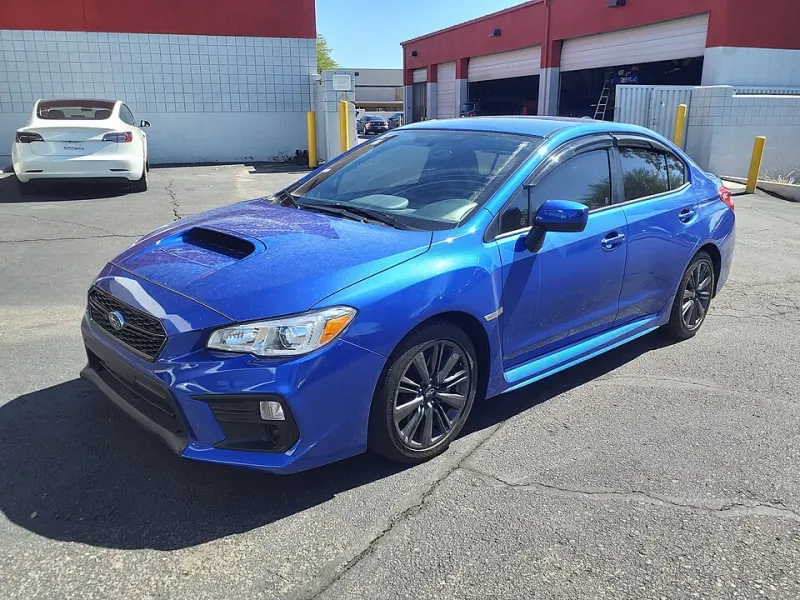
Twenty degrees outside, and your WRX sounds like a tractor for the first minute. The exhaust note is sour, the throttle feels disconnected, and there's a light tap from the engine bay that disappears once you get moving. All of it is normal — and all of it is telling you something about what's going on inside a cold boxer.
Here's the second-by-second version, plus what actually helps and what's just a remote starter burning gas to warm your seat heaters.
Cold Oil Doesn't Pump, It Crawls
At 20°F, your 5W-30 has the consistency of something closer to honey than water. The oil pump is still moving volume, but the flow rate is way down and the pressure reading on your dash climbs. A lot of owners see that high pressure and feel good about it. Wrong read. That number is telling you how hard the pump is working to push sludgy oil through cold galleries, not how much oil is reaching your rod bearings.
Flow is what protects the engine. Pressure is what you get when flow is restricted. The two are not the same thing, and cold mornings are when the difference matters most.
The ECU Is Pouring in Extra Fuel on Purpose
A cold engine doesn't vaporize fuel well. Liquid fuel doesn't burn — vapor does. So the ECU richens the mixture during warmup to keep the engine running smoothly, and a chunk of that extra fuel lands on cold cylinder walls and intake ports instead of burning.
On a direct-injected boxer, that wall-wetting is worse, because the fuel never gets a chance to mix with air on the way in. Some of it washes the oil film off the cylinder walls. Some of it blows past the rings and ends up in your crankcase. That's oil dilution, and it's the single biggest reason short winter trips are harder on your engine than long ones.
Piston Slap Is a Sound, Not a Death Sentence
Subaru's flat-four pistons run loose when cold — short skirts, relatively generous clearances, and aluminum that expands at a different rate than the block. That light tap-tap-tap for the first 30 to 90 seconds is piston slap, and it's a known characteristic of the design, not a warning sign.
What would be a warning sign: the noise continuing after your coolant gauge is up to temp, or getting louder under load once warm. Cold-tap that fades is normal. Warm-tap that doesn't is a conversation with a shop.
Your Remote Starter Is a Seat Heater With Extra Steps
Here's the part nobody wants to hear. Idling does warm the coolant. It does not warm the oil much, and it does absolutely nothing for your transmission fluid, diff fluid, wheel bearings, or tires. So you spend eight minutes burning fuel at zero miles per gallon, adding more fuel dilution to the crankcase, and then you drive off with cold oil anyway.
Idling is the least efficient way to make heat in a car. It's not that it's harmful in small doses — it's that it doesn't buy you what you think it buys you.
FA20 and FA24: Different Engines, Same Physics
The FA20 in the 2015–2021 WRX and the FA24 in the 2022-and-up cars are genuinely different engines — different displacement, different thermal mass, different factory calibration. The FA24's extra half-liter means it can generate heat under light load a little faster and idles a bit more smoothly when stone cold.
But the fundamentals don't change. Cold oil is thick, cold pistons are loose, and cold cylinder walls collect fuel. The FA24's bigger bore doesn't exempt it from dilution, and the FA20's dual-injection setup doesn't magically prevent wall wetting at 20°F. Same physics, slightly different timeline.
Short Trips Are the Real Villain
A five-minute commute in January is the worst thing you can do to a boxer. The oil never gets hot enough to boil off the moisture that condenses inside the crankcase, and the fuel that slipped past the rings never gets a chance to evaporate out. Do that five days a week and you get the classic milky residue under the oil cap, plus a slowly rising dipstick.
If your WRX lives that life, shorten your oil change interval — think 3,000 to 3,500 miles through the winter rather than stretching it. Check the dipstick weekly, and smell it. If it smells like a gas can, you're diluting.
A Warm-Up Routine That Doesn't Waste Gas
- Start it and wait 20 to 45 seconds. That's enough to build oil pressure and settle the idle. Anything past that is for your comfort, not the engine's.
- Drive gently, don't idle. Keep it under about 3,000 rpm and light throttle for the first few minutes. Light load heats the engine faster than idling does.
- Watch oil temp, not coolant. Coolant lies — it's up to temp long before the oil is. If you don't have an oil temp readout, an Accessport or a simple gauge is one of the better hundred bucks you'll spend.
- Consolidate short trips. Once a week, take the long way home and get everything fully hot for 20 minutes. That's your moisture burn-off session.
- In genuinely brutal climates, preheat. A block heater or oil pan heater actually warms the hardware before startup. That's the one gadget that does what a remote starter pretends to do.
The best thing you can do for a cold boxer is simple and free: start it, wait half a minute, and drive it like a normal person.