Why Your 'Easy' Bolt-On Killed Your Gas Mileage: The Fuel Mapping Truth Behind WRX Intake and Intercooler Upgrades
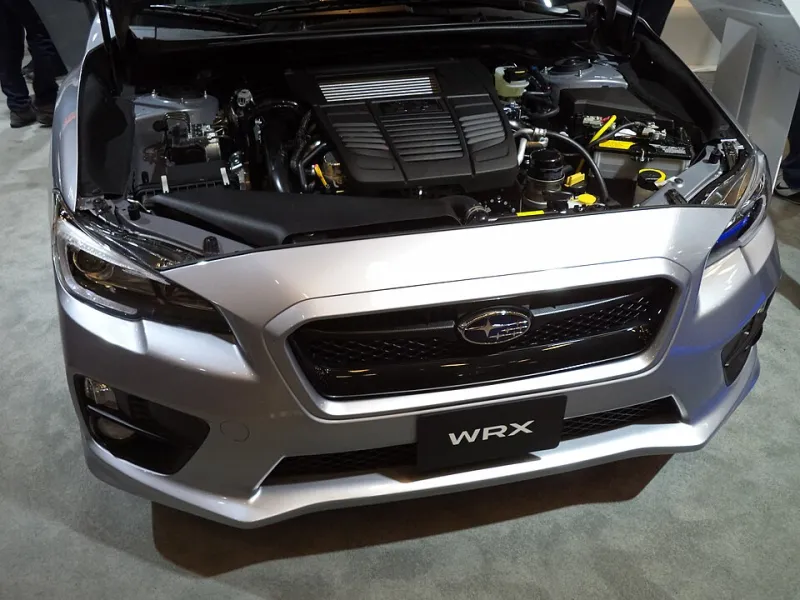
Photo: Zytonits, CC BY-SA 2.0, via Wikimedia Commons
You did everything right. You researched the part, read the forum threads, watched three YouTube installs, and spent a Saturday afternoon in the driveway doing the swap yourself. The new intake manifold or front-mount intercooler is on. The car sounds different — meaner, maybe. And then you fill up the tank a week later and do the math. You're getting worse mileage than before.
Welcome to what a lot of WRX owners quietly discover after their first round of bolt-ons: the "it's just a simple upgrade" promise doesn't always survive contact with your ECU.
The Myth of the Bolt-On Free Lunch
There's a persistent idea in the enthusiast world that certain upgrades are basically free performance — swap them on, gain power, move on. Intake manifolds, upgraded intercoolers, cold air intakes, and similar hardware get sold with language like "direct fit" and "no tune required." And technically, that's often true. The part fits. The car runs. You didn't brick anything.
But your engine management system doesn't know you upgraded anything. It's still running the same fuel and ignition maps it shipped with, maps that were calibrated around the stock airflow characteristics, charge temps, and throttle response curves of the original hardware. When you change any one of those variables — even with a bolt-on that's supposed to be "plug and play" — you're introducing conditions the ECU wasn't designed to handle cleanly.
The result? Your engine compensates. And compensation, in fuel delivery terms, almost always means burning more gas.
What's Actually Happening Under the Hood
Let's get specific, because this is where it gets interesting.
Intake manifolds change the velocity and volume of air entering the engine. A larger or differently shaped manifold can improve top-end flow, but it also changes the pressure dynamics the MAP sensor is reading. If your ECU's fuel table is calibrated expecting a certain pressure response at partial throttle — the kind of load you're at 90% of the time on the highway — a new manifold can throw those readings off enough that the ECU pulls more fuel than necessary to maintain what it thinks is a safe AFR.
Upgraded intercoolers, especially front-mount units, introduce a different problem. A bigger intercooler drops charge temps more aggressively, which is great for power. But cooler air is denser air, and denser air changes the mass airflow calculation. On a speed-density system like the WRX uses, that shift in air density can cause the ECU to enrich the fuel mixture at cruise conditions — the exact opposite of what you want for efficiency.
There's also the throttle response variable. Some aftermarket intake manifolds open up airflow in ways that make the engine more sensitive to small throttle inputs. If you're unconsciously pressing harder to get the same feel you're used to, you're burning more fuel before you even factor in mapping issues.
Real-World Numbers: What Owners Are Actually Seeing
This isn't theoretical. Scroll through any active WRX forum or Facebook group and you'll find the same pattern repeating: someone installs a "mild" bolt-on, skips the tune, and reports dropping from 25-26 MPG on the highway to somewhere in the 21-23 range. That's not a rounding error — that's a meaningful hit to your wallet over time, especially with gas prices doing whatever they're doing this month.
The drop tends to be worst in mixed city/highway driving, where the ECU is constantly hunting for the right fuel delivery across rapidly changing load conditions. Stock mapping is designed for stock hardware. It's not graceful when the ground rules change.
Some owners also report increased knock correction activity after bolt-ons, which triggers additional fuel enrichment as a protection measure. Your ECU is essentially throwing extra fuel at the problem to keep from detonating — noble instinct, terrible for your MPG.
The Tune You Were Told You Didn't Need
Here's the honest answer most parts listings bury in the fine print: almost every meaningful hardware change to your intake tract or charge cooling system benefits from a reflash or a proper tune. "No tune required" means the car won't go into limp mode. It doesn't mean the car is running optimally.
A proper dyno tune or even a quality off-the-shelf map from a reputable tuner who accounts for your specific hardware can recalibrate the fuel tables to match your new airflow characteristics. That means your ECU stops over-fueling at cruise, stops hunting at partial throttle, and starts using your upgraded hardware the way it was actually designed to be used.
For a lot of WRX owners, a tune pays for itself in fuel savings within a year — especially if you're putting on highway miles regularly.
Practical Steps If You've Already Pulled the Trigger
If you've already got the parts on and you're feeling the MPG pain, here's a realistic path forward:
1. Log your data first. If you're running an AccessPort or similar device, pull some datalogs at cruise and look at your fuel trims. Long-term fuel trims sitting consistently positive (LTFT +5% or higher) are a sign your ECU is compensating and adding fuel it shouldn't need to add.
2. Check for boost leaks. An upgraded intercooler with a rushed install can introduce small leaks that wreck fuel economy and mask the real performance gains you paid for. A boost leak test is cheap and worth doing before anything else.
3. Talk to a tuner before adding more parts. It's tempting to stack upgrades and tune once at the end. But every additional untuned part compounds the mapping mismatch. Get a tune dialed in at each major stage if you can.
4. Consider a stage-appropriate OTS map as a bridge. If a full custom tune isn't in the budget right now, a reputable off-the-shelf map calibrated for your specific hardware combination can meaningfully close the gap until you get on a dyno.
5. Revisit your driving habits. This sounds basic, but an intake that sharpens throttle response can genuinely change how you drive without you realizing it. A week of consciously smooth inputs can tell you how much of the MPG hit is mechanical versus behavioral.
The Bottom Line
Bolt-on upgrades are a real and legitimate way to build up your WRX. Nobody here is telling you to leave your car stock. But the "no tune required" label is doing a lot of heavy lifting, and most of it is marketing rather than engineering reality.
Your ECU is running on assumptions. Change the hardware without updating the assumptions, and you're not getting the upgrade you paid for — you're getting a more expensive version of stock performance with a side of worse fuel economy. A proper tune is what closes the loop, turns those hardware gains into actual real-world performance, and gets your mileage back to a place that doesn't make you wince every time you hit the pump.
The bolt-on wasn't the problem. Stopping there was.