Dead Pedal Below 3,500 RPM: What's Actually Causing Your WRX's Low-End Lag and How to Fix It for Real
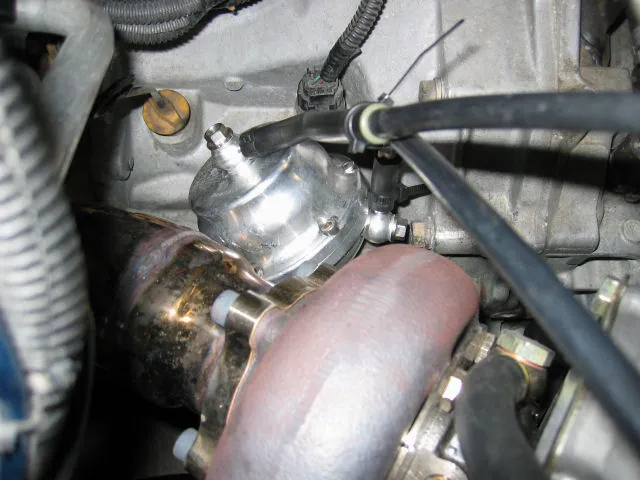
Photo: Unknown, Public domain, via Wikimedia Commons
You've driven your WRX long enough to know the drill. Roll into the throttle at 2,000 RPM, maybe 2,500, and the car just... thinks about it. There's a hollow pause, a vague sense that something should be happening, and then eventually — somewhere north of 3,500 RPM — the boost arrives and the whole experience transforms. It's almost like owning two completely different cars depending on where the tachometer needle sits.
Most WRX owners accept this as the price of admission for a turbocharged platform. And sure, some lag is always going to be part of the equation. But there's a real difference between the inherent characteristics of forced induction and the specific, fixable reasons your particular car might feel unusually lazy down low. Let's get into it.
What's Actually Happening Down There
The turbocharger on your WRX — whether you're running the stock unit or something aftermarket — is driven by exhaust gases. At low RPM, there simply isn't enough exhaust flow to spin the compressor wheel fast enough to build meaningful boost pressure. That's the physics baseline, and no amount of tuning fully eliminates it.
But here's where it gets more nuanced: the threshold at which your turbo starts making usable boost isn't fixed. It's influenced by a handful of variables, and several of them are adjustable. The frustrating part is that a lot of the advice floating around in forums and YouTube comment sections treats lag as a single problem with a single solution, when it's really a layered issue.
The compressor wheel is the most obvious starting point. Bigger wheels move more air at peak, but they take longer to spool — that's the classic efficiency curve tradeoff. The stock IHI turbo on the VA-chassis WRX was actually pretty well-matched for the factory power targets, meaning it spools reasonably quick for its size. When people swap to larger aftermarket turbos chasing big peak numbers, they often trade away exactly the low-RPM responsiveness they had before, and then wonder why the car feels worse in daily driving.
The ECU's Role Is Bigger Than You Think
Here's where a lot of builds go sideways: the tune. Specifically, how the ECU manages boost ramp and fuel delivery in the 1,500 to 3,500 RPM window.
A factory Subaru ECU map is conservative by design. It's protecting hardware across a wide range of fuel quality, ambient temperatures, and driver behavior. That conservatism shows up as a deliberately gradual boost ramp — the ECU isn't in a hurry to ask for big numbers down low because it's managing knock risk across every possible scenario your car might encounter.
When you get a tune, a skilled tuner can tighten that ramp considerably. They can ask for boost earlier in the RPM range and manage the associated fueling and ignition timing to keep things safe. The result is a car that feels noticeably more alert below 3,500 RPM — not because the turbo suddenly spools faster, but because the ECU is no longer artificially holding back what the turbo is already capable of delivering.
The problem is that not all tunes do this well. Some off-the-shelf maps focus almost entirely on peak power numbers because that's what looks impressive on a dyno sheet. Others are tuned by shops that specialize in high-boost builds and simply don't spend much time optimizing the low-end response for street driving. If your car made big numbers on the dyno but still feels half-asleep pulling out of a gas station, this is almost certainly part of the story.
Intake and Exhaust: The Supporting Cast
The intake system affects spool time more than most people realize. The stock airbox on the WRX is actually a reasonably efficient design — Subaru's engineers weren't completely asleep when they spec'd it. Certain aftermarket intakes that pull warm underhood air can actually hurt low-end response despite looking and sounding more aggressive. Cold air feeds and properly designed short-ram setups can help, but the gains are incremental and highly dependent on installation quality.
On the exhaust side, back pressure is a real consideration that often gets dismissed. Turbos need some exhaust back pressure to help drive spool, particularly at low RPM. A very aggressive catback or a loose downpipe connection can actually slow your spool threshold rather than improving it. This doesn't mean you should run restrictive exhaust, but it does mean the relationship between exhaust flow and turbo response is more complex than "less restriction equals more power everywhere."
Driving Technique: The Underrated Variable
Before you spend any money, it's worth being honest about driving habits. A WRX that feels sluggish below 3,500 RPM when you're lugging it in fourth gear at 2,000 RPM isn't broken — it's being driven in a way that doesn't suit a turbocharged platform. Keeping the transmission in a gear where the engine is actually in its useful RPM range transforms the driving experience without touching a single bolt.
This isn't about redlining everywhere. It's about recognizing that a 2.0-liter turbocharged boxer isn't a torque-heavy V8 that pulls cleanly from idle in any gear. Downshifting proactively, keeping RPM above 2,500 in city traffic, and using the paddle shifters on automatic-equipped cars to stay in the right gear goes an enormous way toward eliminating the "lazy" feeling that sends people down the modification rabbit hole prematurely.
The Upgrades That Actually Help
If you've addressed the driving technique side and you're still chasing better low-end response, here's what's actually worth your time and money:
A proper custom tune from a shop that does street optimization, not just peak power. Ask specifically about low-RPM boost ramp and how they approach the 2,000 to 3,500 RPM window. A tuner who can't answer that question clearly isn't the right tuner for a daily-driven WRX.
A top-mount intercooler upgrade. Heat soak kills low-end response in a way that's easy to overlook. A more efficient TMIC keeps charge temps lower during stop-and-go driving, which directly improves the usable boost your engine sees when you get back on the throttle.
Electronic boost controller with a proper map. Some aftermarket boost controllers allow for staged ramp strategies that can be tuned to spool more aggressively in the lower RPM range. This only works properly in conjunction with a supporting ECU tune — a boost controller without a matching tune is a recipe for frustration.
Port injection on FA20 builds. This is a bigger conversation, but adding port injection to supplement the stock direct injection setup gives tuners significantly more fuel delivery control across the RPM range, which often translates to better low-end response when the tune is done right.
The Bottom Line
The boost threshold on your WRX isn't a fixed wall you're stuck with. It's a product of hardware sizing, ECU calibration, supporting mods, and yes, how you're actually driving the car. The frustrating reality is that a lot of the advice out there either oversimplifies the problem or points you toward expensive hardware swaps when the real gains are sitting in a better tune and smarter driving.
If your WRX feels like it's running on two cylinders below 3,500 RPM, start with your tuner's approach before you start shopping for turbos. You might be surprised how much performance was already there, just waiting to be unlocked.