Salt, Slush, and Stance: Which WRX Mods Make It Through Winter and Which Will Cost You in April
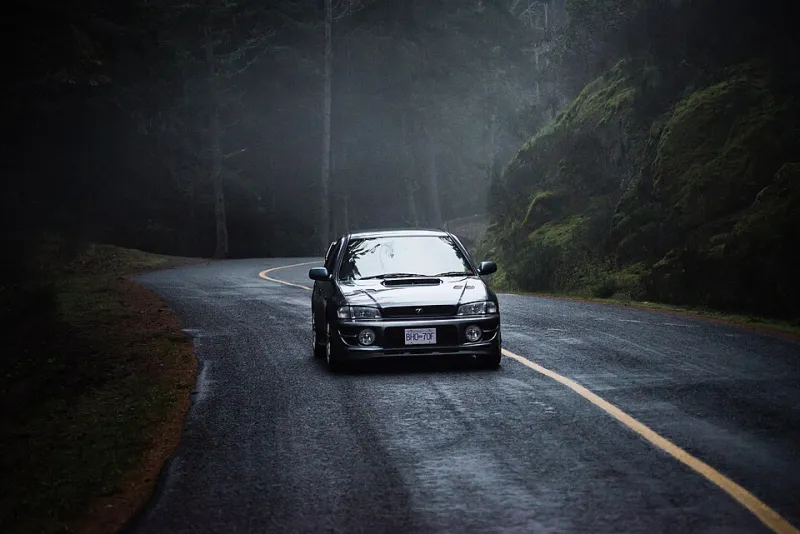
Photo: Quintan Neville, CC BY-SA 3.0, via Wikimedia Commons
Every October, the same debate plays out in WRX group chats across the Midwest and Northeast: pull the car off the road, or roll the dice on another salt season? If you've got money in the car beyond stock, that question gets harder. Some mods shrug off winter without a second thought. Others turn into springtime repair bills that cost more than the part did in the first place.
The Mods That Handle Winter Just Fine
Winter wheels and tires. This one's obvious, but it's worth repeating: a dedicated set of smaller-diameter steelies wrapped in something like a Blizzak or General Altimax is the single best winter mod you can make. The narrow footprint cuts through slush better than your 245s, and if you slide into a curb, you're out $80 for a steel wheel, not $400 for your forged Enkeis.
A mild, well-supported tune. A conservative Stage 1 flash on 91 or 93 octane doesn't care about the temperature outside, and modern ECUs handle cold-air corrections without drama. What you want to avoid is a tune that's already on the edge of knock in summer — the first 10-degree morning combined with bad winter fuel can push it over. If your tuner didn't build in cold-weather safety margin, that's a conversation to have before the first frost.
Underbody protection done right. Fluid film, woolwax, or a proper ceramic undercoating applied in the fall is technically maintenance, not a mod — but on a modified WRX you actually care about keeping rust-free, it's the highest-ROI money you'll spend all year.
The Ones That Quietly Rot in Your Driveway
Coilovers. Here's the uncomfortable truth: most budget-to-mid-tier coilovers ($800–$1,500 range) are not sealed for road salt. The shaft gets pitted, the seal gets chewed up, and by March you've got adjustable dampers that adjust nothing. We've seen a set of $1,200 coilovers go from fresh to knocking in a single salt season. If you're dailying on coilovers through winter, budget for a rebuild or replacement roughly every two years — or raise the car, swap back to stock struts, and save the good stuff for track season.
Cold air intakes with exposed filters. A cone filter sitting in the front bumper well is a snow-eating machine. Deep slush plus a filter that's already saturated with road grime equals hydrolock risk and a MAF sensor coated in winter garbage. If you're running an intake, winter is the time to either run a hydroshield prefilter or swap back to a sealed airbox setup.
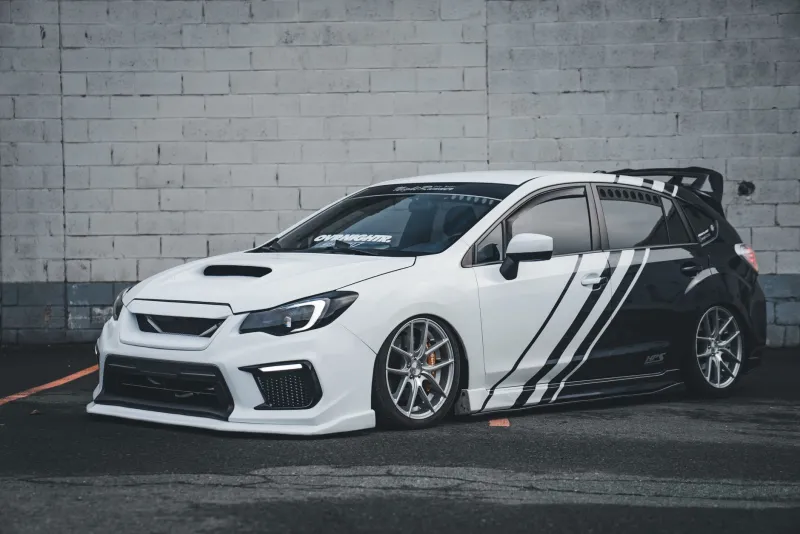
Big wheels with low-profile tires. Beyond the obvious pothole carnage — and Midwest potholes after a freeze-thaw cycle are apocalyptic — a 19-inch wheel with a 35-series tire gives winter rubber nowhere to flex. You're paying a winter performance penalty and a wheel repair bill simultaneously.
Lowered ride height in general. Anything under about a finger-and-a-half of gap means your front lip, oil pan, and exhaust are plowing snow. The WRX's ground clearance is already a compromise; take two more inches away and you're high-centering in a shopping plaza entrance.
Your Pre-Winter Checklist, Modified Edition
Run through this before the first plow truck sighting:
- Brake inspection. Salt accelerates rotor rust and caliper piston corrosion. If your pads are below 4mm, replace them now — cheap pads + salt = grabbing, uneven braking.
- Check your tune's cold-weather behavior. Log a cold start and a highway pull on a chilly morning.
- Fluid check. Fresh coolant with proper freeze protection. If you're running a high-temp thermostat for track use, consider reverting for winter.
- Coating. Underbody spray, and hit suspension fasteners with anti-seize so spring wrenching doesn't turn into a cutting-wheel job.
- Wiper and washer check. Winter blend washer fluid, and if you've deleted your rear wiper for aesthetics, you're about to learn why that was a mistake.
- Battery test. Cold + a big draw from extra lighting or audio = no-start mornings.
The Real Cost Math
Here's what a neglected winter actually costs a modified WRX owner, based on real-world bills we've seen:
- Replacement coilovers after salt damage: $900–$1,500
- Curb-rashed wheel repair (per wheel): $125–$200
- Rusted exhaust hangers and hardware: $150–$400 in parts and labor
- MAF cleaning and intake troubleshooting: a Saturday and $60 in supplies
- A proper fall prep day (coating, fluids, inspection): about $200
Spend the $200 in October or spend the $2,000 in April. The math isn't close.
The Verdict
Winter doesn't have to be the off-season for your build — but it does demand honesty about what your parts are made for. Track-focused hardware is track-focused for a reason. Strip the car back toward its cold-weather strengths, protect what you're keeping, and your spring will start with driving instead of wrenching. That's the whole point, isn't it?